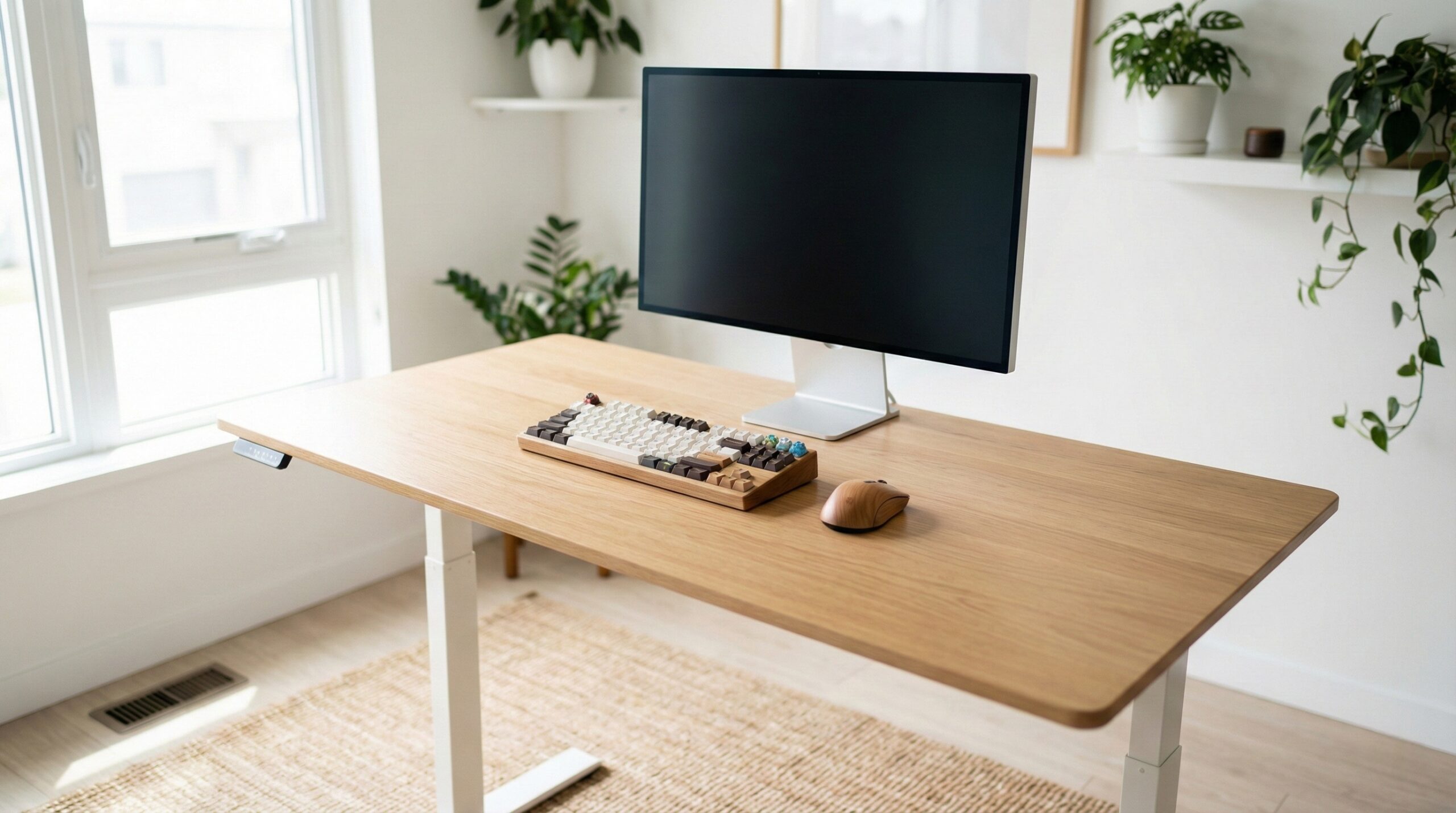
TL;DR
A good monitor stand for a desk is the one that raises your screen to a comfortable eye level, fits your monitor base, and stays stable on your desktop. For most home office setups, we like a simple adjustable riser for easy height tuning; if you mainly want built-in organization, a wide riser with a drawer can be the better value.
What a Monitor Stand for Desk Actually Is
A monitor stand for a desk (often called a monitor riser) is a platform that sits on your desktop and lifts your monitor higher than its factory base allows. The goal isn’t to “make your desk look nicer”—it’s to get your screen into a more neutral viewing position so you’re not spending hours looking down and bending your neck. Ergonomics guidance from workplace-safety and human-factors organizations generally points you toward keeping the top of the screen around eye level (or slightly below) in your normal seated posture, with a comfortable viewing distance. A stand is one of the simplest ways to get there without changing your chair, desk, or monitor.
In practical terms, most desk monitor stands do three things:
- Add height: Commonly a few inches of lift to bring the screen closer to the right sightline.
- Create usable space: Many stands leave open clearance underneath for sliding a keyboard, notebook, or dock out of the way.
- Improve organization: Some models include drawers, shelves, or cable pass-throughs for small accessories.
There are two broad “formulas” buyers end up choosing between:
- Fixed riser/stand = stable platform + one height (or limited height steps) + optional storage. This is the low-fuss choice: set it down, place your monitor, and you’re done.
- Monitor arm = clamp/grommet mount + VESA plate + full adjustment (height, depth, tilt, swivel). Arms are best when you need frequent repositioning, want to reclaim desk surface area, or switch between sitting and standing.
Before you buy, the “fit” details matter more than most people expect:
- Height gain: How many inches will it lift your screen? You’re aiming for a neutral neck posture; OSHA computer workstation guidance is a solid starting point for monitor positioning concepts.
- Top surface size: Your monitor base should sit fully on the platform, not teeter on an edge.
- Footprint vs. desk depth: A stand that’s too deep can pull the monitor closer than you like and eat your working area.
- Load rating and stability: Don’t treat weight limits as optional — especially with larger or ultrawide displays. Guidance like NIOSH ergonomics resources reinforces the bigger idea: build a workstation that supports neutral posture and reduces strain; the stand is part of that system.
Who a Monitor Stand for Desk Fits Best
A desk monitor stand is usually a great fit if your current monitor sits low, your desk height can’t change, and you want a simple fix that doesn’t require wall mounts or hardware. Here are the scenarios where we see it work best.
- You’re getting neck or upper-back fatigue from looking down: If your screen’s top edge is well below eye level, a riser can help you get closer to common ergonomic targets (top of screen around eye level, in an upright posture).
- You want quick improvement without a complicated install: Many stands assemble in minutes (or not at all), and there’s no clamp, VESA plate, or routing to deal with.
- You want “parking space” under the monitor: If your keyboard, notebook, or dock is always in the way, a riser with adequate clearance can give you that extra layer of organization.
- You share the desk: An adjustable-height stand can make it easier for two people (or two chair heights) to find a workable screen position.
Home office worker reviews regularly highlight setup simplicity and the posture benefit when the height range is right. For example: “It was very easy to set up and adjust right out of the box. The adjustable height options make it easy to find a comfortable viewing position, which has helped improve my posture while working.” — verified buyer, 5 stars
If you’re unsure about your target height, a certified ergonomist or occupational therapist can help you set up your workstation (monitor height, distance, chair adjustments) so the stand is solving the right problem instead of just moving it around.
Who Should Skip a Monitor Stand for Desk
A monitor stand isn’t always the right solution. In these cases, you’re often better off with a monitor arm, a different desk setup, or no add-on at all.
- Your monitor is already at a good height: If the top of the screen is already around eye level and you’re comfortable, adding a riser can overshoot and force you to look up — another kind of strain.
- Your desk is shallow: Some stands eat up depth, pulling the screen too close. If you’re already cramped, consider an arm (which can move the screen back) rather than a platform that sits in front of the wall.
- You need precise repositioning all day: Designers, coders on calls, and sit/stand desk users often do better with an arm for quick height and distance adjustments (assuming your monitor supports VESA mounting).
- You’re expecting “no assembly” but dislike any setup at all: Some popular stands do require a screwdriver. Buyer feedback is clear that it’s quick, but it’s still a step: “The stand requires assembly with a screwdriver and uses four screws to attach the feet of the stand to the shelf. I wasn’t expecting this, but it only took about 2 minutes to assemble.” — verified buyer, 4 stars
Also consider surface protection: metal stands without good padding can mark softer desktops. If you have a delicate finish, prioritize rubber feet/pads or plan to add felt pads where the stand contacts the desk.
Price and Value
Monitor stands span a surprisingly wide range — from “basic lift” to “premium desk shelf furniture.” Here’s how the pricing usually breaks down (and what you actually get for the money), using representative options:
- Budget adjustable risers ($10–$20): This is where options like the WALI Adjustable Computer Monitor Stand for Desk land. The value here is simple: ergonomic height tuning and a stable platform at a low price. If your main goal is getting the screen up a few inches, this tier often delivers.
- Midrange storage-focused risers ($30–$40): Stands like the Simple Houseware metal riser add features (a drawer/organizer, big surface area) and can feel more “finished” on the desk. You’re paying for organization and a larger platform, not necessarily better ergonomics.
- Premium desk-shelf systems ($460–$540): Higher-end setups like the balolo Setup Cockpit Monitorständer Large are furniture-grade desk shelves meant to be part of a broader workspace system. The value proposition is aesthetics, materials, and modular organization — not just monitor height.
Value tip: don’t overpay for “looks” if you still haven’t validated the basics (how much lift you need, whether your monitor base fits, and whether the stand’s footprint works on your desk). Conversely, if you care about the desk being a long-term piece of furniture and you want integrated organization, paying more can make sense — especially if it replaces multiple organizers.
Common Mistakes When Trying a Monitor Stand for Desk
Most monitor-stand regret comes from buying based on the product photo instead of measurements. These are the pitfalls we see most often in home office worker reviews and setup troubleshooting.
- Not measuring your monitor base (and the usable platform area): A stand can look wide, but lips/raised edges or tapered corners may reduce the flat area where your base actually sits. Measure base width/depth and compare it to the stand’s top surface.
- Choosing height based on “more is better”: Too tall can be as annoying as too short. Aim for a height that supports a neutral neck posture; then fine-tune with your chair height and monitor tilt. If multiple people use the desk, adjustable height is often worth it.
- Ignoring desk depth and ending up too close to the screen: If the stand is deep and your desk is shallow, you can unintentionally shorten your viewing distance. That can increase eye fatigue and make the workspace feel cramped.
- Underestimating wobble and load needs: Large monitors, ultrawides, and setups with a light bar/webcam add stress. Pay attention to load rating and feet grip — especially if you type heavily or your desk has any wobble.
- Assuming every stand is “set and forget”: Some stands are adjustable, and you may actually want to use that feature. As one reviewer put it: “It was very easy to set up and adjust right out of the box. The adjustable height options make it easy to find a comfortable viewing position, which has helped improve my posture while working.” — verified buyer, 5 stars
Safety note: avoid stacking books or boxes as a “temporary riser.” If it slides or tips, it can damage your monitor (or your hands). A purpose-built stand with a real weight rating and non-slip feet is the safer route.
FAQ
How high should my monitor be on a desk stand?
In most seated setups, a good starting point is having the top of the screen around eye level (or slightly below) when you sit upright. That’s consistent with common workstation ergonomics guidance, including the general monitor-positioning principles in OSHA computer workstation guidance. Fine-tune from there based on bifocal/progressive lenses, posture, and how far you sit from the screen.
Should I buy a monitor stand or a monitor arm?
Choose a stand/riser if you mainly need a simple height boost and you like the idea of storage underneath. Choose a monitor arm if you want maximum adjustability (height, depth, tilt, swivel) or you’re trying to free up desk space. If you go the arm route, confirm your monitor supports VESA mounting (commonly 75×75 or 100×100).
How do I know if a monitor stand will fit my desk?
Measure (1) your desk depth, (2) the stand footprint depth, and (3) your preferred viewing distance. Then measure your monitor base to ensure it fits fully on the platform. If the stand pushes the monitor too close to your face, consider a shallower stand or a monitor arm that can position the screen farther back.
What weight rating do I need for a monitor stand?
Start with your monitor’s weight from the manufacturer specs, then add margin for accessories like a webcam, light bar, or small speakers that might sit on the stand. Be extra cautious with ultrawides and large displays — even when the number looks “within spec,” stability can suffer if the stand is narrow or top-heavy.
How do I stop a monitor stand from scratching my desk?
Look for non-slip rubber feet or padded contact points. If your stand is metal or has hard plastic feet, add felt or rubber pads where it touches the desktop. This is especially important on softer wood, veneer, or laminate finishes.
Can I put my laptop on a monitor stand?
You can, but check two things: the stand’s weight rating and airflow. Laptops need ventilation, and placing one on a flat shelf can block vents depending on the design. If you’re trying to raise a laptop screen for ergonomics, many people do better with a dedicated laptop stand plus an external keyboard/mouse.
My stand feels wobbly — what should I do?
First, confirm the stand is fully assembled and sitting flat (all feet contacting the desk). Then verify your monitor weight is within the stand’s rating and that your monitor base is centered and fully supported. If wobble persists, a wider, sturdier stand or a properly installed monitor arm can be a better fix — especially on a desk that already shakes when you type.
Looking for these on Amazon? Browse monitor stand for desk on Amazon →
Bottom Line
The right monitor stand for a desk is the one that hits your ergonomic height target, fits your monitor base and desk depth, and stays stable — no wobble, no sliding. If you want the simplest path to better screen height, an adjustable riser is usually the best buy; if your bigger problem is clutter, a wide riser with built-in organization can deliver more day-to-day value.
Affiliate disclosure: This page includes affiliate links. Purchases through these links support our work at no added cost.