TL;DR
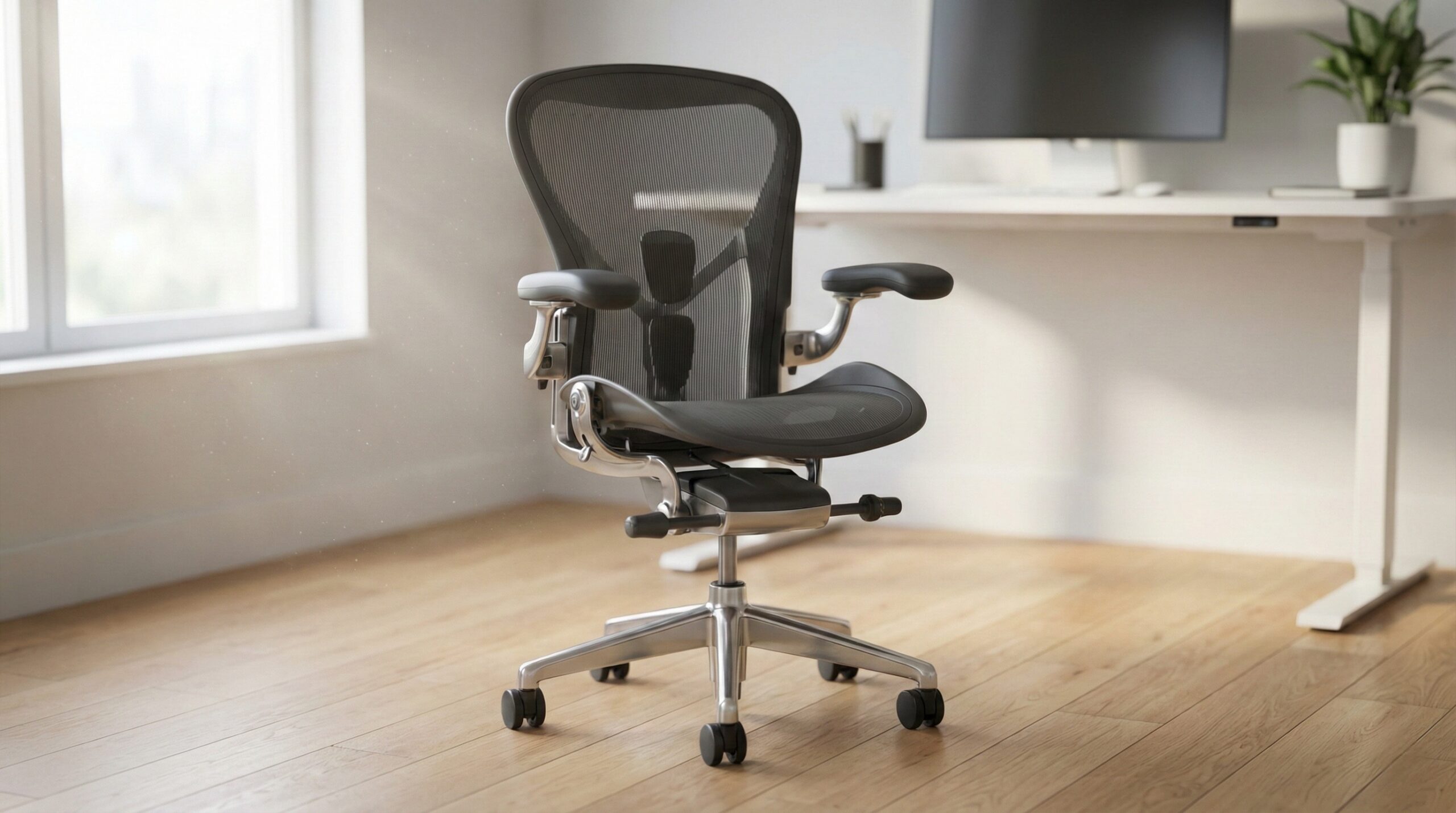
If you’re searching “anthros office chair,” you’re almost always looking for the Anthros Chair: a premium ergonomic chair built around pelvic positioning and posture guidance, not the usual lumbar-first approach. It can be a great fit if you’re willing to spend top-tier money and you’re also willing to treat setup and a real at-home trial as part of the purchase.
Before you buy, make sure the chair can be adjusted to your desk (feet-flat seat height, relaxed shoulders at the keyboard, neutral pelvis) and double-check the trial/return and warranty terms — those are what reduce the risk when you’re spending nearly $2,000.
What Anthros Office Chair Actually Is
In practice, “Anthros office chair” is shorthand for a specific product: the Anthros Chair. It’s positioned as a premium ergonomic seating system that tries to solve a common complaint with many high-end chairs: even with lumbar support dialed in, some people still feel “off” after long sitting — tight hips, a slumped pelvis, pressure in the low back, or a sense that they’re constantly fighting their chair.
The main difference is the design philosophy. Many ergonomic chairs lead with lumbar support (support the lower back curve, then adjust everything else around it). Anthros emphasizes pelvic positioning—the idea that where your pelvis lands can influence what your spine does above it. Instead of relying on a big lumbar pad to “hold you up,” the chair aims to help you sit back and settle into a more neutral, supported position.
That comes with a tradeoff: chairs that provide more active posture cues tend to be less forgiving of sloppy setup. If your seat height is wrong, your desk is too high, or your armrests aren’t supporting your forearms, you can end up blaming the chair for a workstation problem. This is why we think it’s smart to evaluate the Anthros Chair like a system:
- Seat height first: Can you sit with feet flat and knees roughly level (or slightly below hips) at your desk?
- Seat position/depth: Do your thighs feel supported without pressure behind the knees?
- Pelvic support next: Can you get a neutral pelvis without feeling forced into an exaggerated arch or tuck?
- Armrests and desk match: Can you keep shoulders relaxed with elbows supported around a right angle while typing/mousing?
- Back/tilt behavior: Does the chair feel stable and supportive in upright task work and (if you use it) in recline?
General ergonomics guidance from institutions like OSHA and NIOSH consistently points to the same basics — neutral posture, supported arms, and a workstation that fits you — not just a “good chair.” If you want a refresher before spending premium money, start with OSHA’s computer workstation guidance and NIOSH’s ergonomics overview.
Who Anthros Office Chair Fits Best
The Anthros Chair tends to make the most sense for a specific type of buyer: someone who already knows they don’t do well in typical “lumbar-centric” ergonomic chairs, and who is open to a chair that feels more like a posture tool than a plush lounge seat.
Consider Anthros if one or more of these situations sounds like you:
- You’ve tried lumbar support chairs and still can’t get comfortable for real work blocks. If you keep fiddling with lumbar height/depth and nothing sticks, the pelvis-first concept may be worth testing.
- You want posture guidance, not just cushioning. Some people prefer a chair that gently “tells” them where to sit rather than letting them slump.
- You’re willing to do a structured trial. With a premium posture-oriented chair, it’s normal to need multiple sessions to dial things in. The goal is “better after a week,” not “perfect in 30 seconds.”
- You care about risk reduction at this price. Trial/return logistics and warranty clarity matter more when the chair costs as much as a small home office buildout.
Home office worker reviews suggest that for the right body type and adjustment needs, the chair can feel uniquely “fitting” compared to what they’ve used before: “The Anthros chair is the 1st chair ever to fit my body comfortably. I am on the taller spectrum standing, but sitting I am the shortest. This chair adjusts on all necessary and” — Trustpilot reviewer, 5 stars.
If you’re unsure whether the pelvic support approach will work for you, the most practical test is: can you adjust the chair so your pelvis feels neutral, you can breathe comfortably, and you can stay there while doing your actual tasks (typing, calls, focused work) for 30–60 minutes at a time without feeling “held” in an unnatural position?
Who Should Skip Anthros Office Chair
Anthros isn’t a safe “everyone will like it” buy — especially given the price. We’d think twice (or skip outright) if any of these apply:
- You want a soft, sink-in chair. Posture-forward chairs often feel firmer or more directive, and that can be a deal-breaker if you equate comfort with plushness.
- You dislike active posture cues. Some people simply prefer a chair that gets out of the way and doesn’t influence how they sit.
- You don’t want to tinker. If you’re not willing to adjust seat height, armrests, and pelvic/back settings methodically, you may never experience what the chair is trying to do.
- You have a known spine/hip condition that makes posture changes risky. A chair is not treatment. If posture changes flare symptoms, it’s smart to talk with a certified ergonomist, physical therapist, or occupational therapist before committing.
- You’re sensitive to total delivered cost. Premium chairs can get expensive fast once shipping, taxes, and return logistics are factored in.
On that last point, critical buyer feedback specifically calls out cost beyond the chair itself: “The chair itself costs €2,000, just like its top competitors from Herman Miller, but unlike that company, Anthros charges an additional €700 for shipping and taxes. Are we crazy?” — Trustpilot reviewer, 1 star.
Even if you’re comfortable with the base price, don’t skip the fine print: when return shipping is on you (or packaging requirements are strict), it changes the risk profile.
Price and Value
The Anthros Chair sits firmly in the premium tier. The typical pricing we see is $1,949–$2,199 depending on configuration. At that level, “value” is less about getting the cheapest ergonomic chair and more about whether you’re paying for a design that actually works for your body and can hold up over years.
Here’s how we’d frame value for an Anthros-style purchase:
- Value is real if the pelvic approach solves what you couldn’t solve with lumbar support. If you’ve tried other reputable ergonomics setups and still feel like you’re perching, sliding forward, or collapsing into your pelvis, a different support concept can be worth the premium.
- Value drops fast if you can’t get a good fit at your desk. If the chair can’t get low/high enough for feet-flat posture at your desk height, or if the armrests can’t play nicely with your keyboard/mouse height, you can end up paying premium money to fight your workstation.
- Value depends on the trial and return terms. At nearly $2,000, a usable trial window and clear return logistics are part of what you’re buying. Put a reminder on your calendar a week before the trial ends so you have time to decide.
- Value includes warranty execution, not just warranty length. A chair at this price should have clear coverage terms and a realistic path to replacement parts or support if something fails.
One more point: if you’re comparing this purchase against “pain relief” expectations, keep it grounded. Evidence indicates better workstation fit and neutral posture can reduce strain risk for many people, but outcomes vary widely person to person. Use the chair as an ergonomics tool, not a promise of symptom resolution.
Common Mistakes When Trying Anthros Office Chair
Most “this chair didn’t work” outcomes happen because the chair is tested in a suboptimal setup, or adjusted too aggressively on day one. Based on common workstation ergonomics guidance (and the kinds of issues buyers report when trying posture-forward chairs), these are the mistakes we’d avoid:
- Starting with pelvic/back adjustments before seat height. If your feet aren’t flat and stable, everything above your hips is compensating.
- Keeping the desk too high and shrugging into the armrests. Armrests should support relaxed shoulders. If you’re elevating your shoulders to reach the desk, your neck and upper traps pay for it.
- “Cranking” posture support to feel something. Strong cues can feel like pressure. Make small changes, then test for 30–60 minutes.
- Judging it after one session. Your body may need time to adapt to a different sitting pattern, especially if you’ve been slumping for years.
- Not documenting settings. If you make multiple changes at once, you won’t know what helped or hurt. Change one thing, test, repeat.
Also, don’t ignore total ownership logistics. One buyer’s frustration wasn’t about comfort — it was about the all-in cost after shipping/taxes: “The chair itself costs €2,000, just like its top competitors from Herman Miller, but unlike that company, Anthros charges an additional €700 for shipping and taxes. Are we crazy?” — Trustpilot reviewer, 1 star.
If you want a simple “setup order” that aligns with OSHA-style workstation adjustment logic, do it like this:
- Seat height (feet flat; knees roughly level or slightly below hips).
- Seat depth/position (support thighs; no pressure behind knees).
- Armrests (elbows supported; shoulders relaxed).
- Keyboard/mouse position (close enough that elbows aren’t reaching forward).
- Monitor height/distance (so you’re not craning your neck).
- Only then: fine-tune pelvic/back support and recline tension.
FAQ
Is the Anthros Chair good for back pain?
It can help some people by improving seated positioning, but it’s not guaranteed “back pain relief.” Use it as an ergonomics tool: focus on whether you can sit with a neutral pelvis, supported arms, and a workstation setup that doesn’t force you to slouch or shrug. If pain persists or worsens, consider checking in with a clinician (and for workstation setup, a certified ergonomist or occupational therapist can help).
What’s different about pelvic support compared to lumbar support?
Lumbar support focuses on supporting the curve of your lower back. Pelvic-oriented systems try to influence how your pelvis sits in the chair, which can affect how your spine stacks above it. If you’ve found that lumbar adjustments don’t stop you from sliding forward or collapsing into a slouch, the pelvis-first concept may be worth testing.
What adjustments should I set first on a new ergonomic chair?
Start with seat height, then seat depth/position, then armrests, and only then fine-tune back or pelvic support. This order aligns with general workstation ergonomics principles outlined in OSHA’s computer workstation guidance.
How do I know if the Anthros approach will work for my body?
A practical test is whether you can dial in a neutral, comfortable pelvis position and maintain it during real work tasks for 30–60 minutes without feeling forced or fatigued. If you feel like you’re constantly bracing, or the chair feels like it’s pushing you into an unnatural posture, it may not be the right match.
How long should I trial a premium chair before deciding?
Plan for at least 1–2 weeks of daily use, because your body and your setup both need time to settle. Make one adjustment at a time and keep notes. Also, put a calendar reminder a week before the return window ends so you have time to evaluate realistically.
Do I need to change my desk setup when I buy a posture-focused chair?
Often, yes — at least a little. A chair can’t fix a desk that’s too high, a keyboard/mouse that’s too far away, or a monitor that forces neck strain. If you want a baseline checklist, NIOSH’s ergonomics overview is a solid place to start.
What should I verify before ordering an Anthros Chair?
Verify (1) the trial length and when it starts, (2) return logistics (packaging, shipping costs, any fees), (3) warranty length and component coverage, and (4) that the chair’s adjustment range will work with your desk height and your body size. At this price tier, those details are part of the purchase.
Looking for these on Amazon? Browse anthros office chair on Amazon →
Bottom Line
The “Anthros office chair” most buyers mean is the Anthros Chair: a premium, pelvis/posture-oriented ergonomic chair that can be worth it if traditional lumbar-focused chairs haven’t worked for you. It’s best approached as a system purchase — chair plus proper workstation setup plus a real at-home trial — so you can confirm it fits your body and your desk before you fully commit.
Affiliate disclosure: This page includes affiliate links. Purchases through these links support our work at no added cost.