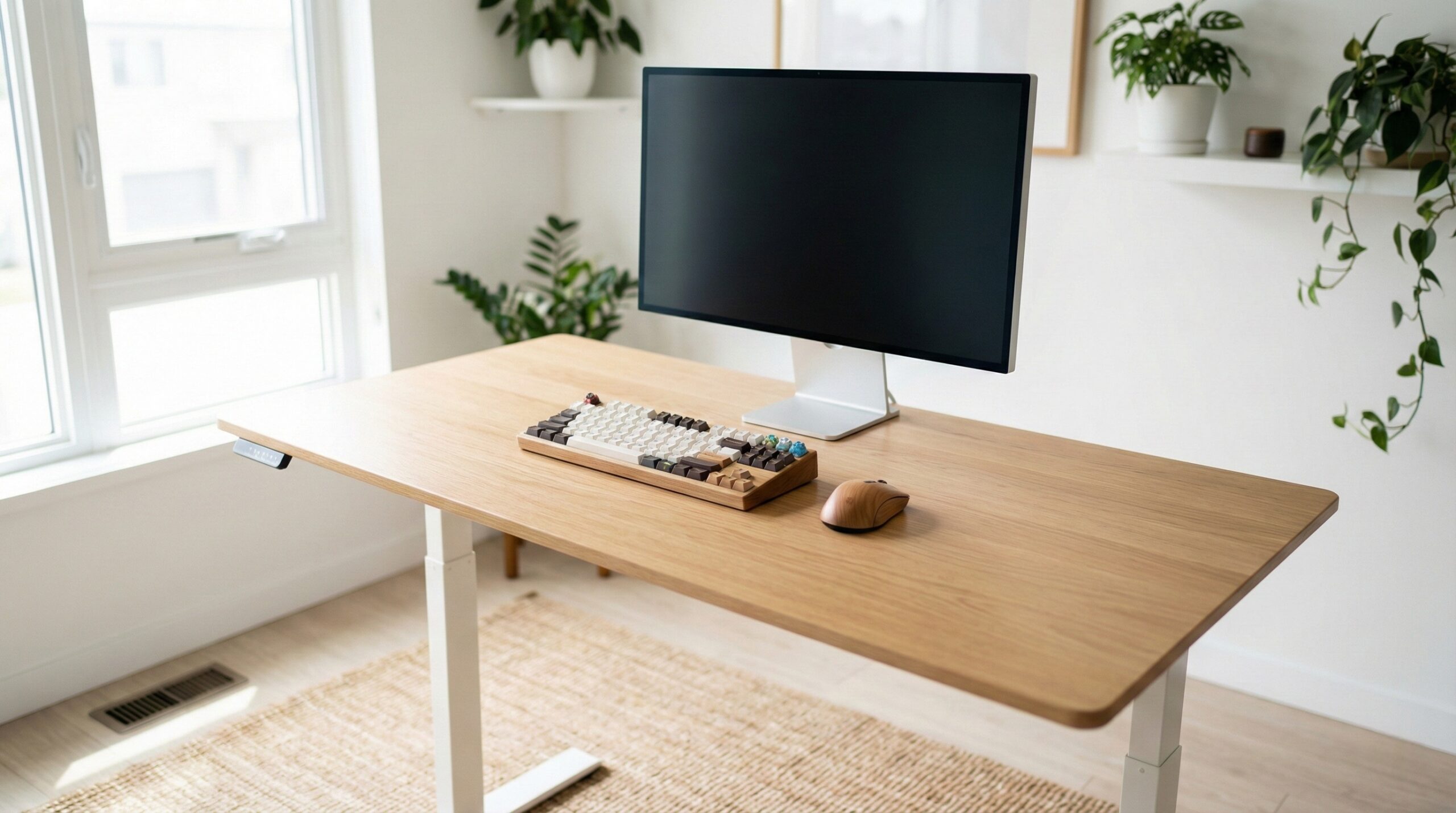
TL;DR
A standing desk topper can be a smart buy if you want sit-stand flexibility without replacing your whole desk, but it only works well when it fits your desk, your body, and your equipment. For most buyers, the right pick is the one that keeps the monitor and keyboard at ergonomic height together, feels stable while typing, and still leaves your desk usable when the topper is lowered.
What a Standing Desk Topper Actually Is
A standing desk topper, also called a desk converter or sit-stand converter, is a platform that sits on top of your current desk and moves up and down so you can work seated or standing. Instead of buying a full-height-adjustable desk, you keep the desk you already have and add a lifting workstation on top of it.
That sounds simple, but this category is more demanding than it looks in product photos. A topper has to fit the width and depth of your current desk, support the real weight of your setup, and raise both your screen and your input devices into a usable posture. If it misses on any of those, you can end up with a workstation that is awkward when seated, shaky when standing, or cramped all day.
The main appeal is convenience. A topper is usually faster to set up than replacing a whole desk, which makes it attractive for renters, home office workers in shared spaces, and anyone who cannot swap furniture easily. It can also be a lower-cost path into sit-stand work, especially if your current desk is otherwise fine.
But there is a real tradeoff: a converter takes up space even when lowered. That matters more than many buyers expect. A deep, wide topper can crowd notebooks, speakers, lamps, and the everyday items that normally live on your desktop. In some setups, the lowered keyboard tray can also make seated typing worse if your base desk is already on the tall side.
Ergonomic fit matters here. Guidance from OSHA computer workstations and Cornell ergonomics research points to the same basics: keep the monitor at a comfortable viewing height, keep the keyboard and mouse where your shoulders can stay relaxed, and avoid bent wrists and prolonged static posture. With a standing desk topper, that means you are not just shopping for “maximum height.” You are shopping for the right relationship between monitor platform height, keyboard tray height, desk height, and your own body dimensions.
In practical terms, the best standing desk topper is not the biggest or tallest one on the page. It is the one that fits your desk footprint, supports your monitor count, leaves enough room for your keyboard and mouse, and moves easily enough that you will actually switch positions during the day.
Who Standing Desk Toppers Fit Best
Standing desk toppers fit best for people who already have a decent desk and want a simpler way to alternate between sitting and standing. If your current desk is sturdy, reasonably sized, and at a workable seated height, adding a converter can be a practical upgrade instead of a full furniture replacement.
They are especially well suited to renters, apartment dwellers, and people working in temporary or shared home office setups. If you expect to move soon, work in a multipurpose room, or do not want to haul in a large electric desk, a topper is easier to add and easier to remove.
This category also makes sense for people who want more movement throughout the day, not people expecting to stand nonstop. Research and clinical guidance generally suggest that changing positions is more realistic than trying to stand all day. Mayo Clinic and workplace ergonomics guidance both support the idea that alternating sitting, standing, and walking is usually the healthier target than holding one posture for hours.
A topper is often a good match if:
- You like your current desk and just want sit-stand flexibility.
- You use a laptop plus monitor, or one to two monitors, within the unit’s size and weight limits.
- You need a lower-cost entry point than a full standing desk.
- You want a setup that is quicker to install than replacing your entire workstation.
- You are willing to measure carefully before buying.
It can also work well for home office workers who need to preserve the room’s layout. A full standing desk may change the look and footprint of the room more dramatically, while a topper lets you keep existing drawers, shelves, and cable routing.
The ideal buyer is detail-oriented. You should be ready to measure desk depth, check rear clearance near walls or shelves, and think through your full equipment load. That includes monitors, laptop stand, dock, keyboard, mouse, speakers, and any allowed monitor arm. The buyers happiest with toppers are usually the ones who planned around those constraints before ordering, rather than assuming any converter will work because the width looked right online.
Home office worker reviews often praise the convenience factor when the fit is right. One buyer summed up the appeal this way: “It let me keep my existing desk and start switching between sitting and standing right away.” — verified buyer, 5 stars.
If that sounds like your situation, a standing desk topper can be a very reasonable solution. Just go in with the right expectation: the goal is a better sit-stand routine on your current desk, not a perfect substitute for a full-size adjustable desk in every workspace.
Who Should Skip Standing Desk Toppers
This category is not for everyone. If your current desk is already too high when seated, adding a topper may make your keyboard and mouse position worse even at the converter’s lowest setting. That is one of the most common reasons a desk topper disappoints. A setup that forces raised shoulders or bent wrists will not feel good just because it lets you stand occasionally.
You may also want to skip a topper if you need a lot of open desk space. Converters are bulky by nature. Even good ones reduce usable surface area when lowered, and some take over most of the middle of the desk. If you spread out papers, use audio gear, draw, write by hand, or need lots of elbow room, a full standing desk may be the better long-term move.
Heavy or complex setups are another caution point. A dual-monitor workstation with large displays, speakers, a dock, and clamped accessories can push a topper beyond its comfortable limits even if the listed weight capacity looks adequate on paper. Weight is only part of the issue. Stability matters too, especially when typing or adjusting the height.
Skip this category if:
- Your desk is shallow and cannot handle the topper footprint.
- Your seated workstation is already borderline too tall.
- You use very heavy monitors or need a lot of accessories mounted to the workstation.
- You want the cleanest cable management and most usable surface area.
- You expect a medical fix for pain symptoms.
That last point is important. A standing desk topper should not be treated as a cure for back, neck, or wrist pain. Evidence indicates that reducing static sitting and improving fit can help comfort for some people, but persistent symptoms should be discussed with a qualified clinician, certified ergonomist, or occupational therapist. If you are already dealing with pain, a better workstation may help, but it is not a guaranteed fix on its own.
Buyer feedback reflects these tradeoffs. One critical review captures a common frustration: “It takes up more desk space than I expected, and sitting with it lowered still feels cramped.” — verified buyer, 2 stars.
If that sounds like a likely outcome in your room or with your equipment, a full standing desk may be money better spent.
Price and Value
Standing desk toppers usually appeal on value because they cost less than replacing your entire desk, but price alone can be misleading in this category. The cheapest units often cut corners in exactly the areas that matter most: lift stability, keyboard tray space, usable height range, and overall footprint efficiency.
In broad terms, smaller single-monitor converters tend to sit at the lower end of the market, while wider models built for dual monitors, heavier loads, or smoother lift mechanisms cost more. Once you move into larger, sturdier converters, the price gap between a topper and an entry-level standing desk can narrow enough that it is worth comparing both options carefully.
Good value in this category usually means:
- A lift range that actually fits your seated and standing posture.
- Enough width and depth for your real setup, not just the monitor diagonal.
- Stable typing with minimal wobble.
- A keyboard tray large enough for both keyboard and mouse.
- A lowered profile that does not ruin your seated ergonomics.
Bad value is a converter that seems inexpensive but forces immediate compromises, like using a mouse on the main desk because the tray is too narrow, hunching your neck because the screen does not rise enough, or leaving the unit in one position because adjustment feels annoying. If a topper makes you avoid switching positions, it undercuts the reason to buy one in the first place.
There is also a hidden value question: what happens to your desk space? If a converter makes your current desk feel cluttered or unusable, you may end up buying extra storage, monitor accessories, or even a new desk later. In that case, the “budget” choice was not really the budget choice.
For many buyers, the sweet spot is a mid-range topper that matches their monitor count and body dimensions without oversizing the footprint. Going larger than you need can make the desk harder to use when seated, while going too small often leads to cramped mousing space or poor stability.
If you are comparing a premium topper against a modest full standing desk, think hard about your long-term setup. If you need lots of surface area, cleaner cable management, and better seated ergonomics, the full desk may offer better value over time. If you like your current desk and just need a reliable sit-stand layer on top, a well-fit topper can still be the smarter spend.
Common Mistakes When Trying Standing Desk Toppers
The biggest mistake is shopping by monitor size instead of workstation footprint. A buyer may think, “I only have a 27-inch monitor, so this should fit,” while forgetting the keyboard, mouse, laptop, dock, speakers, and the side-to-side space needed for comfortable use. User reports repeatedly show that a topper can look roomy in photos and feel crowded in daily work.
Another common mistake is ignoring your current desk height. Because the converter sits on top of your desk, it raises your seated work surface too. If your base desk is already tall, the topper’s lowest position may still put your keyboard too high. OSHA and Cornell guidance both emphasize neutral shoulders and wrist posture, so this is not a minor detail. It can determine whether the whole setup feels sustainable.
Buyers also underestimate how much reduced desk space matters in real life. When the topper is lowered, you still need room for notebooks, coffee, chargers, and all the little things that collect in a home office. “I didn’t realize how much of my desktop it would occupy when not standing.” — home office buyer, 3 stars.
Other mistakes to avoid:
- Assuming any “dual monitor” label means solid stability for two large screens.
- Checking weight capacity for monitors only, instead of the whole setup plus typing pressure.
- Forgetting to confirm whether monitor arms are allowed.
- Choosing a keyboard tray too narrow for a mouse next to the keyboard.
- Expecting to stand all day instead of planning regular position changes.
Cable management is another easy one to miss. Height-adjusting converters need enough cable slack for full travel. If cords are taut, they can snag, pull accessories, or limit movement. Before daily use, raise and lower the unit through its full range and watch every cable path.
It is also a mistake to chase maximum height without checking the keyboard-to-monitor relationship. Some converters get the screen high enough, but leave the keyboard in a position that makes your shoulders lift or your wrists extend. A certified ergonomist would usually tell you to assess the whole posture, not a single spec line.
Finally, many people expect the topper itself to fix discomfort. In reality, comfort usually depends on the full workstation: chair height, foot support, monitor placement, keyboard angle, mouse reach, and how often you move. You may still need to adjust your chair or use a footrest. Resources like OSHA workstation chairs and CDC NIOSH ergonomics are useful reminders that the converter is only one piece of the setup.
FAQ
How do I know if a standing desk topper will fit my desk?
Measure your desk width and depth first, then compare that with the topper’s full footprint, not just the work surface size. Also check rear clearance for walls, shelves, and monitor stands, because some converters need extra space behind them when moving. If your desk is shallow, a topper may technically fit but still leave too little room for everyday use.
Can a standing desk topper hold two monitors?
Yes, many can, but only if the platform width, stability, and total weight capacity match your actual setup. Add up both monitors, any laptop, dock, accessories, and allowable arm hardware if the unit supports it. Dual-monitor buyers should pay extra attention to wobble, because a platform can meet the listed weight limit and still feel shaky in daily typing.
Will a standing desk topper make my seated position worse?
It can. Since the converter sits on top of your existing desk, it raises the keyboard and monitor even when lowered. If your desk is already on the tall side, seated typing can become less comfortable. That is why fit matters as much as standing height. Guidance from OSHA computer workstations is a good reference for checking neutral wrist and shoulder positioning.
Is a standing desk topper better than a full standing desk?
It depends on your priorities. A topper is usually easier to add, cheaper up front, and practical if you want to keep your current desk. A full standing desk usually gives you more usable surface area, cleaner cable management, and fewer seated-height compromises. If your workspace is complex or your current desk is already too tall, the full desk often makes more sense.
Do I need a monitor arm with a standing desk topper?
Not always. Some people get enough height and positioning from the topper itself. A monitor arm can help if you need finer adjustment or more screen height, but you should only use one if the converter is designed to support clamped accessories. Check the manufacturer’s guidance carefully, since unsupported monitor arms can affect balance and stability.
Can a standing desk topper help with back or neck pain?
It may help some people if it improves posture and encourages more movement, but it should not be treated as a medical fix. Research suggests that breaking up long periods of sitting can be useful, yet poor setup can still aggravate discomfort. If symptoms persist, it is smart to talk with a qualified clinician, occupational therapist, or ergonomics professional. For general setup guidance, Cornell ergonomics research offers practical workstation advice.
How often should I switch between sitting and standing?
There is no single perfect schedule for everyone, but the goal is regular movement rather than standing for hours at a time. Many people do best when they alternate positions throughout the day and also take short walking breaks. Avoid prolonged static standing, especially if your feet, legs, or lower back start to fatigue.
What matters more: maximum height or keyboard tray design?
For most buyers, the relationship between the keyboard tray and monitor height matters more than maximum height alone. A topper is only working well if the screen is easy to view while the keyboard and mouse let your shoulders stay relaxed and your wrists stay neutral. A tall lift range is not helpful if the tray is cramped or poorly positioned.
Looking for these on Amazon? Browse standing desk topper on Amazon →
Bottom Line
A standing desk topper is worth buying when it fits your current desk, raises your screen and keyboard into a workable posture together, and feels stable enough that you will actually use the sit-stand feature regularly. It is a practical solution for many home offices, but only when you measure carefully and account for the space it takes up when lowered.
If your desk is already tall, your setup is heavy, or you need a lot of open workspace, a full standing desk may be the better long-term choice. For everyone else, a well-chosen topper can be a simple way to add movement to the workday without rebuilding the whole office.
Affiliate disclosure: This page includes affiliate links. Purchases through these links support our work at no added cost.