TL;DR
An Autonomous standing desk makes the most sense if you want an electric sit-stand setup with a stable frame, enough lift capacity for your real monitor-and-accessory load, and controls that make height changes easy to use every day. For most buyers, the best value comes from focusing on frame stability, motor setup, height range, and warranty terms rather than extras or headline marketing claims.
If you already own a solid desktop, a frame-only route can save money, but complete desk packages are usually simpler and lower risk. Research and ergonomics guidance also suggest that the point is regular movement between sitting and standing, not standing all day.
What Autonomous Standing Desk Actually Is
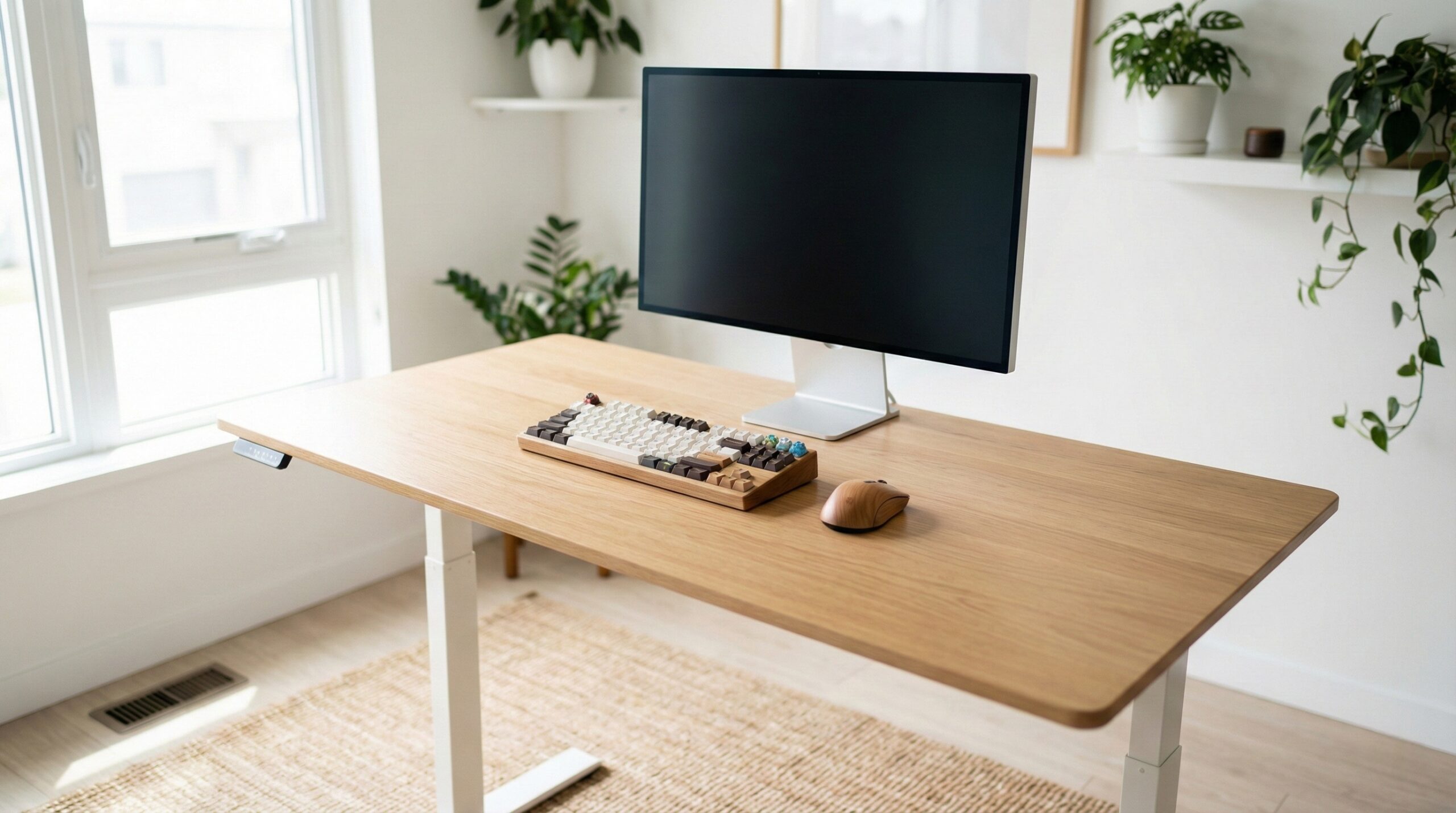
An Autonomous standing desk is an electric sit-stand desk designed to let you raise and lower your work surface through the day, usually with a motorized frame, programmable controls, and a desktop sized for home office use. In practical terms, this category is less about the logo on the box and more about whether the desk can handle your setup without wobbling, straining, or becoming annoying to use.
That means the big things to look at are the frame, motor design, height range, stability at standing height, realistic weight handling, and day-to-day usability. If your desk will hold one laptop and a light monitor, your needs are different from someone running dual displays on monitor arms, a desktop PC, speakers, and under-desk accessories. A desk that looks spacious can still disappoint if the frame flexes too much or the lift rating does not match your actual equipment load.
For frequent sit-stand users, dual-motor designs generally make more sense than lighter-duty single-motor options. They tend to suit heavier setups better and usually feel smoother in regular use. Stability also matters more than buyers sometimes expect. A desk can seem fine while seated and still feel shaky once it is fully raised, especially if you type hard, use a wide top, or mount long monitor arms. Four-leg and heavier-duty frames usually target buyers who care most about rigidity and load handling.
Noise and speed also affect whether you will really use the desk. If it takes too long to move or sounds harsh in a bedroom office or on video calls, many people end up changing positions less often. That defeats the point. Buyer feedback across the category consistently shows that convenience matters: memory presets, anti-collision features, and smooth travel make it easier to alternate positions without disrupting work.
Ergonomics guidance from OSHA computer workstations and CDC NIOSH ergonomics supports using sit-stand desks as part of a broader workstation setup, including correct monitor height, keyboard position, and reach zones. Evidence also indicates that a standing desk works best when it supports posture changes through the day, not nonstop standing. Mayo Clinic guidance aligns with that idea: ease into standing time gradually, and keep alternating rather than treating the desk like a stand-all-day station.
So the category formula is pretty simple: sturdy frame + enough lift capacity + a useful height range + tolerable noise + controls you will actually use. Get those right, and an Autonomous-style standing desk can be a very practical home office upgrade.
Who Autonomous Standing Desk Fits Best
This type of desk fits best for people who spend long hours at a computer and want a simpler way to change posture during the day. If you often feel stiff after long seated stretches, a motorized sit-stand desk can make movement more realistic because the adjustment is quick enough that you are more likely to use it. That is especially true if you pick a desk with memory presets, since one-touch transitions remove friction from the routine.
It is also a strong fit for buyers planning a heavier workstation. If you run dual monitors, use monitor arms, keep a laptop dock on the desk, or have speakers and other accessories, a stronger frame and realistic load handling matter. In those cases, dual-motor desks usually deserve extra attention. They are often the better match for more demanding daily use and frequent adjustment cycles.
Remote workers in apartments, bedrooms, or shared offices should also prioritize this category when quiet operation is important. A desk that moves smoothly and quietly is easier to live with during early mornings, late evenings, or video calls. Daily usability sounds like a small thing until you realize it determines whether the desk becomes part of your routine or just stays at one height forever.
Frame-only Autonomous-style desks make the most sense for tinkerers and cost-conscious buyers who already own a compatible top. If you have a solid desktop in the right width, depth, and thickness, a frame can be a smart way to save money and customize materials. That said, you need to be comfortable measuring carefully, confirming mounting points, and handling extra assembly decisions.
This category also suits buyers who care about fitting the desk to their body size. Height range is easy to overlook, but it matters if you are shorter or taller than average. A desk needs to go low enough for seated ergonomics and high enough for standing elbow height. User reports point to this as a major satisfaction factor, especially for multi-user homes or people who are hard to fit with basic office furniture. As one home office worker review put it, “The motor is steady and quiet and the desk is very sturdy. I purchased this particular model because the adjustable height range started at 22” which perfectly suits ergonomic” — Trustpilot reviewer, 5 stars.
If your goal is not to stand all day, but to make sitting less static, this kind of desk can be a very good fit. That approach lines up with common ergonomics advice from OSHA and a certified ergonomist or occupational therapist would generally give similar guidance: alternate positions, keep your monitor and keyboard aligned, and treat movement as the benefit, not constant standing.
Who Should Skip Autonomous Standing Desk
You should probably skip this category if you want the absolute simplest setup and do not want to think about assembly, cable slack, desktop compatibility, or height tuning. A standing desk is not difficult for most buyers, but it does ask more of you than a fixed desk. If you want something that is ready with minimal decisions, a complete package is better than a frame-only model, and even then some setup work is unavoidable.
Buyers with very light computing needs may also not need to spend extra here. If your setup is just a laptop and occasional paperwork, a premium electric standing desk may be more desk than you need. In that case, the money might go further toward a better chair, monitor arm, or keyboard arrangement. OSHA’s guidance on OSHA workstation chairs is a useful reminder that desk height is only one part of the workstation.
You should also skip lightly built options if you know your workstation is heavy. Big tops, dual monitors, long monitor arms, and desktop PCs can expose weak frames quickly. A load rating on paper does not always translate into a desk that feels solid at full standing height. Buyer feedback across the category often comes down to this exact mismatch: the desk technically lifts the load, but the experience becomes less stable than expected.
People expecting to stand from morning to evening should pause too. Research suggests that static standing for long periods can create its own discomfort. Sit-stand desks are better viewed as tools for varying posture through the day. If your plan is to stand constantly, it is worth resetting expectations before buying.
Finally, skip frame-only if you are unsure about desktop fit, weight distribution, or drilling. Compatibility mistakes can erase any savings. Buyer frustration often starts with underestimating how much the desktop itself affects stability and total load. One critical home office worker review captures the broader category lesson well: “Recently, one of the motors started giving out. I” — Trustpilot reviewer, 5 stars. Even though the review is positive overall, it is still a reminder that moving parts and electronics can become the weak point over time, so buyers who want maximum long-term simplicity may prefer a fixed desk.
Price and Value
Value in this category depends less on sticker price alone and more on what you are getting in frame quality, motor setup, stability, and warranty coverage. A cheap standing desk that wobbles with monitor arms or struggles with daily height changes can feel expensive fast. A better-built desk often costs more up front but makes more sense if you work from home every day.
From the options tied to this search intent, the only clear price band provided is for the FLEXISPOT E6 Bamboo 3-Stage Dual Motor 60 x 30 Electric, which lands around $450 to $500. That is useful as a rough benchmark for a more substantial electric standing desk with a larger top and dual-motor design. It is not a direct price for Autonomous itself, but it shows where many buyers start crossing from budget territory into desks aimed at heavier daily use.
For Autonomous desks specifically, the better way to judge value is by deciding whether you need a complete desk or just a frame. A frame-only purchase can be a smart value play if you already own a sturdy top and are confident it is compatible. Reusing a desktop can keep your total spend down and may let you choose a nicer material than a bundled package at the same budget.
But frame-only only pays off when your measurements are right and your extra costs stay under control. Hardware, drilling, finishing, and the time required to source a good top can eat into the savings. For many buyers, a complete desk package offers better real-world value because it reduces compatibility risk and shortens setup time.
Warranty details matter here too. A long frame warranty can be reassuring, but it is worth reading how electronics, controllers, and desktops are covered. In practical value terms, a desk is only as dependable as the parts most likely to fail in everyday use. Buyer feedback tends to reward desks that get the basics right: steady lifting, low noise, sensible controls, and a frame that still feels solid when the desk is actually raised.
If you work from home full time, paying more for a better frame is usually easier to justify than paying more for cosmetic upgrades. In this category, value usually means fewer annoyances over thousands of height adjustments, not just a lower initial price.
Common Mistakes When Trying Autonomous Standing Desk
The most common mistake is buying based on desktop size or marketing language instead of the frame underneath. A large top does not automatically mean strong load handling or good standing-height stability. Plenty of buyers focus on surface area first, then realize later that their dual monitors and arms have pushed the desk into a less stable setup than expected.
Another mistake is undercounting your real equipment load. Do not just count the monitors. Add monitor arms, laptop stands, docks, speakers, under-desk cable trays, and anything mounted beneath the top. Safety guidance for the category is clear: overloading can strain motors and reduce stability, especially with heavier tops or accessory-heavy setups.
Buyers also often overlook cable management. On a sit-stand desk, cable slack is not cosmetic; it is functional. Power cords, charging cables, and monitor leads need enough length and a clean route so they do not snag or pull during height changes. Anti-collision features help, but they are not a substitute for keeping the lifting path clear.
A fourth mistake is treating the desk as a stand-all-day solution. Ergonomics guidance generally points toward alternating positions, not replacing one static posture with another. Mayo Clinic’s consumer advice and broader ergonomics recommendations suggest easing into standing time gradually and continuing to move through the day.
Assembly shortcuts are another avoidable problem. If the desk is not built on a level surface, or if fasteners loosen after setup, wobble tends to get worse at taller heights. Re-checking hardware after the first stretch of use is a good habit, especially if the desk gets moved or reconfigured.
There is also a fit mistake many shoppers miss: not checking minimum and maximum height against their own body. A desk that seems versatile in a listing can still be wrong for a shorter seated user or a taller standing user. If your proportions are unusual, this is one of the best reasons to review dimensions carefully before ordering.
Finally, some buyers wait too long to set up presets. Memory controls are one of the features that make a standing desk genuinely useful, but only if you dial them in. As one buyer-facing listing quote puts it, “FLEXISPOT EN1 One-Piece Standing Desk, Electric Adjustable with 4 Memory Presets, 176 LBS Capacity, Stable & Quiet, Seamless Desktop for Home Office & Dual Monitors, 48"x24" Black” — Amazon listing quiet dual monitors on r/Amazon listing. The wording is promotional, but the practical lesson is still valid: if your desk has presets, use them so switching positions takes seconds instead of becoming a chore.
If you are setting up a full workstation around the desk, Cornell ergonomics research is a useful reference point for monitor placement, posture variation, and workstation fit. The desk works best when the rest of your setup supports it.
FAQ
Is a dual-motor standing desk worth it?
Usually yes, especially if you have dual monitors, monitor arms, a larger desktop, or you plan to change heights often. Dual-motor desks generally make more sense for heavier and more demanding setups because they tend to offer smoother day-to-day lifting and better support for frequent adjustment.
Can a frame-only standing desk save money?
Yes, if you already own a compatible top or can source one affordably. The catch is that you need to verify width, depth, thickness, mounting compatibility, and total weight. If you also need to buy hardware, drill a top, or refinish material, the savings can shrink quickly.
How much weight capacity do I really need?
Count your full working load, not just the desktop or monitors. Include displays, monitor arms, laptop docks, speakers, under-desk accessories, and anything mounted to the frame. It is smart to leave headroom rather than shopping right at the published limit.
Are standing desks meant for all-day standing?
No. Most ergonomics guidance points to alternating between sitting and standing rather than staying in one posture all day. The practical goal is movement variation. Mayo Clinic advice on standing desks follows that same idea: build up gradually and keep switching positions as comfort allows.
What height range should I look for?
You want a desk that goes low enough for relaxed seated keyboard use and high enough to let your elbows rest near a comfortable working angle while standing. This matters even more if you are shorter or taller than average, or if more than one person uses the desk.
Does a longer warranty mean a better standing desk?
Not automatically, but it is still a useful signal. Look beyond the headline term and check what is covered for the frame, motors, electronics, and desktop. A long frame warranty is helpful, but the smaller components often matter just as much in long-term ownership.
How can I make a standing desk more ergonomic?
Start with monitor height, keyboard placement, and arm position. Your screen should be easy to view without craning your neck, and your keyboard and mouse should let your shoulders stay relaxed. OSHA computer workstations is a solid baseline for setup guidance, and a certified ergonomist or occupational therapist can help if you have persistent discomfort.
What matters more: load capacity or stability?
Both matter, but stability is often what you feel day to day. A desk may technically lift a certain amount and still become less pleasant to use if it sways at standing height. If you use monitor arms, a wide top, or type heavily, pay close attention to frame design and owner feedback about wobble.
Looking for these on Amazon? Browse autonomous standing desk on Amazon →
Bottom Line
An Autonomous standing desk is a strong fit for buyers who want easy posture changes, solid frame performance, and enough capacity for a real home office setup. The smartest buy is usually the one with the best combination of stability, height range, quiet operation, and warranty clarity for your actual gear.
If you already have a compatible desktop, a frame-only setup can offer good value. For everyone else, a complete package is usually the easier route, and the best results come from using it as a sit-stand tool for regular movement, not an all-day standing station.
Affiliate disclosure: This page includes affiliate links. Purchases through these links support our work at no added cost.