TL;DR
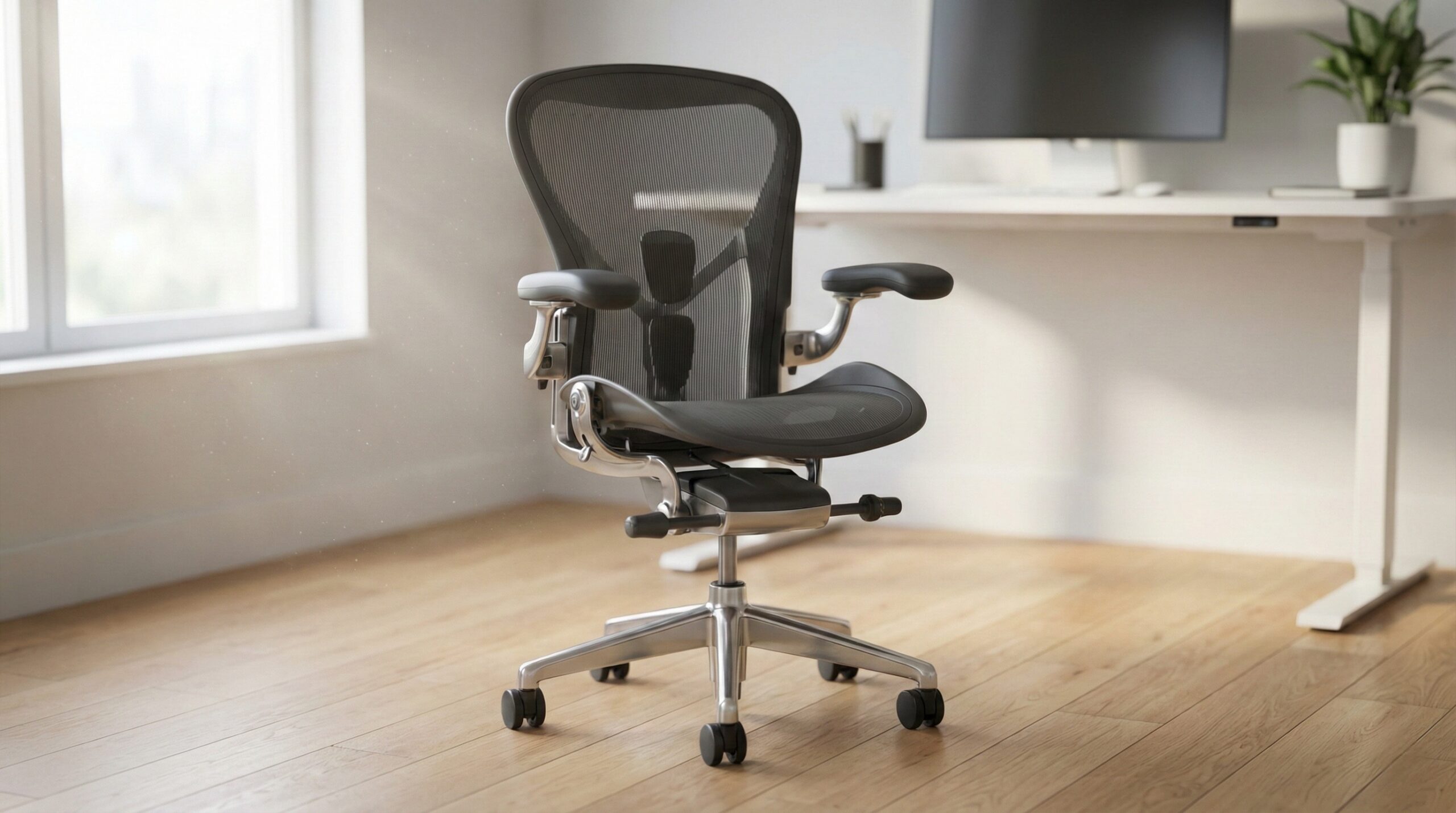
A tall office chair is one that can get the seat high enough for your desk and still support longer legs and torso with the right seat depth, armrest range, and back/lumbar placement. For most home office setups, start with seat-height range and adjustable seat depth, then use armrest adjustability and a stable tilt mechanism as your “long-term comfort” filters.
If you’re shopping in the big-and-tall category, pay extra attention to how well the recline/tilt locks and whether the seat feels supportive over hours — those are two places user reports commonly flag issues.
What a Tall Office Chair Actually Is
When people search for a “tall office chair,” they often mean a chair that looks big — usually a “high-back” executive style. But for fit and comfort, a true tall office chair is more about geometry and adjustability than the silhouette.
In practical terms, a tall office chair is a chair that can:
- Reach a higher usable seat height so you can sit with your elbows roughly level with your desktop while your shoulders stay relaxed.
- Support longer legs with enough seat depth (or an adjustable seat pan) so your thighs are supported without the front edge digging into the backs of your knees.
- Support a longer torso with a backrest that reaches at least to shoulder-blade level and lumbar support that lands in the right place (not mid-back).
- Reach your arms at taller setups with armrests that go high enough (and ideally move in/out and forward/back) so you’re not shrugging your shoulders to find support.
The “formula” we use when advising tall buyers is:
Desk height match (seat height + arm height) + leg fit (seat depth) + spine fit (back/lumbar) + mechanism quality (tilt/recline)
Why start with desk height? Because if your chair can’t get you to the right working height, you’ll compensate — by shrugging your shoulders, reaching for the keyboard, or perching forward. OSHA’s workstation guidance emphasizes neutral posture fundamentals (supported feet, neutral wrists, relaxed shoulders, and a chair that adjusts to you), and those basics matter even more as body proportions get farther from “average.” You can reference OSHA computer workstation guidance for the baseline setup goals.
Finally, tall users tend to notice mechanism shortcomings sooner. Higher seating positions and longer limbs can create more leverage when you recline or shift weight, so tilt tension quality, lock positions, and base stability become more than “nice to have.” Durability claims vary by brand, but chairs designed and tested against recognized standards (like BIFMA) generally offer more confidence in long-term safety and structural performance. See BIFMA seating standards information for what those standards cover at a high level.
Who a Tall Office Chair Fits Best
A tall office chair is usually a strong fit if you recognize any of these scenarios:
- You’re raising the seat to match a taller desk (or a desk that sits higher than ideal) and need a chair that remains stable and supportive when elevated.
- You have long thighs and keep sliding forward because the seat pan is too short, or you feel pressure behind the knees from an awkward seat edge.
- Your shoulders/neck get tired because the armrests don’t go high enough (so you end up hovering your arms or shrugging).
- You want a “big-and-tall” build primarily for sturdiness — stronger base/cylinder, less wobble, and better durability signals (even if you’re under the stated weight limit).
- You recline to take calls or read and want a chair that feels controlled in tilt, not like it’s dropping or forcing you into one angle.
One thing we see a lot in home office worker reviews: buyers will purchase a “big and tall” chair expecting it to be dramatically higher than a standard chair. Sometimes it is; sometimes it isn’t. As one owner put it: “It’s not nearly as tall as I expected, but it fits me perfectly at my relatively short 5’6" height.” — verified buyer, 5 stars.
If you’re tall and planning to sit higher to align with your desk, also plan for foot support. If your feet don’t rest flat on the floor at your working height, a footrest can help you keep your knees and hips in a more neutral position — something general ergonomics guidance (including NIOSH principles around neutral posture and reducing strain) aligns with. For broader ergonomics basics, see NIOSH ergonomics resources.
Who Should Skip a Tall Office Chair
A tall office chair isn’t automatically the right choice just because you’re tall. Consider skipping (or being extremely picky) if any of these sound like you:
- You’re sensitive to firm seats and the chair you’re considering is known (in user reports) for very stiff cushioning. “Executive” styling can hide a surprisingly hard seat.
- You need fine-grained tilt control for task work and posture changes. Some big-and-tall models only offer a handful of lock positions, which can feel limiting over long days.
- You’re expecting “tall” to fix pain by itself. Evidence indicates ergonomic improvements can help comfort and reduce aggravating factors, but no chair is a guaranteed cure — especially if the desk height, monitor height, and keyboard/mouse placement are still working against you.
- You’re tight on space. Many big-and-tall chairs have wider bases and bulkier backs that can crowd smaller home offices.
In particular, tilt limitations come up often in buyer feedback for some tall-leaning executive chairs: “The biggest issue is the chair tilt mechanism that it comes with. While it is well made, it only has 5 locking positions.” — verified buyer, 5 stars.
If you already know you need very specific ergonomic adjustments (precise lumbar height, true synchro-tilt feel, high arm range, and a seat pan that slides), it may be worth consulting a certified ergonomist or occupational therapist—especially if you’re buying to address recurring discomfort rather than just to “size up.”
Price and Value
For tall office chairs — especially big-and-tall executive styles — pricing tends to cluster into two common brackets:
- Budget big-and-tall executive chairs: roughly $175–$225. This is where you often get a high-back look, a footrest on some models, and basic recline/tilt. The tradeoff is that fine adjustability (seat depth, arm pad positioning, multi-position tilt locks) is often limited, and seat feel can be polarizing.
- Midrange big-and-tall executive chairs: roughly $350–$450. You’re usually paying for heavier construction, sometimes better padding and finishes, and occasionally more robust mechanisms. But “more expensive” still doesn’t guarantee the adjustments tall users care about most (like a truly dialed-in tilt or seat-pan tuning).
Value comes down to whether the chair solves the fit problem you’re actually experiencing:
- If your main issue is desk clearance and elbow height, prioritize seat-height range and armrest height range.
- If your main issue is leg support, prioritize seat depth (or adjustable seat pan) even before headrest/back height.
- If you change posture a lot, prioritize tilt smoothness and useful lock positions—because “recline exists” isn’t the same as “recline is usable for work.”
Also treat high weight-capacity claims as a durability signal, not a promise of comfort. If the chair notes alignment with recognized testing practices, that’s a plus; BIFMA is the industry reference point many buyers recognize for safety/durability testing norms (see BIFMA standards overview).
Common Mistakes When Trying a Tall Office Chair
Based on home office worker reviews and the most common “it didn’t work for me” patterns, these are the mistakes we’d avoid:
- Buying based on “high-back” photos instead of measurements. A chair can look tall and still place lumbar support too high/low or fail to support your shoulder blades.
- Assuming “big and tall” means “extra high seat.” Some chairs are built wider and heavier but don’t add as much usable seat height as you’d expect.
- Ignoring seat feel. If you sit for long stretches, cushioning and pressure distribution matter. A seat can look plush and still feel very firm in practice. One review put it bluntly: “The seat on this chair looks deceptively soft. It is not soft but hard as a rock.” — verified buyer, 1 star.
- Not planning foot support when you raise the seat. If you have to set the seat high to match the desk, don’t let your legs dangle — use a footrest so you can keep a stable, supported lower-body posture (OSHA’s general workstation guidance supports feet support as part of neutral sitting posture).
- Overlooking tilt lock limitations. If you like a slightly reclined working posture, a chair with only a few lock positions can force you into “too upright” or “too far back.” A separate user report flagged: “Have to rate a three because there is no adjustment for seat tilt, and the seat feels tilted forward.” — verified buyer, 3 stars.
- Skipping a quick fit check after assembly. After you build the chair, do a 5-minute test: adjust height so elbows are near desktop height, slide hips fully back, check for a small gap behind knees, then test armrests so shoulders stay down.
FAQ
How high should my seat be in a tall office chair?
Set seat height so your elbows are roughly level with the desk while your shoulders stay relaxed, and your wrists stay neutral on the keyboard/mouse. If that height makes your feet lose solid contact with the floor, add a footrest rather than lowering the seat and compromising your upper-body position. OSHA’s setup principles are a good baseline: OSHA computer workstation guidance.
Is seat depth more important than back height for tall people?
Often, yes. A back that looks tall won’t help much if the seat is too short and you end up sliding forward or getting pressure behind the knees. Taller users frequently do best with a deeper seat or an adjustable seat pan so the thighs are supported while leaving a small gap at the knee crease.
Do I need a headrest if I’m tall?
Only if it adjusts high enough to support your head/neck without pushing your head forward. A poorly positioned headrest can encourage a chin-forward posture. Many tall users do fine with an upper backrest that reaches to shoulder-blade level and good lumbar support; a headrest is more about your preferred resting posture than “required” ergonomics.
What weight capacity should I look for in a tall office chair?
Stay under the stated limit, but also use capacity as a rough durability clue: heavier-rated chairs may use sturdier cylinders, bases, and frames. Claims vary, so it’s helpful when brands reference recognized testing norms. For what “standards” generally mean in seating, see BIFMA seating standards information.
Can I make a regular office chair work for a tall setup?
Sometimes — especially if the chair already fits your seat depth and back/lumbar placement and you only need a bit more height. But swapping to a taller cylinder doesn’t fix common tall-user problems like limited armrest height, a short seat pan, or a backrest that hits the wrong part of your spine. If you’re trying to solve multiple fit issues at once, starting with a chair designed for taller proportions is usually simpler.
What’s the safest way to sit higher without feeling unstable?
First, avoid maxing out height just to “feel tall”—raise the seat only as much as needed for desk alignment. Second, keep feet supported (floor or footrest) and avoid aggressive reclining when you’re perched high, since a higher center of gravity can feel less stable. General ergonomics principles around stable posture and reducing strain are covered in NIOSH ergonomics resources.
Looking for these on Amazon? Browse tall office chair on Amazon →
Bottom Line
A tall office chair is the right move when it truly matches your desk height and supports longer legs and torso with the adjustments that matter: seat height, seat depth, armrest range, and stable tilt. Shop with measurements and fit checks first, then use user reports about seat comfort and tilt/lock behavior as your “reality check” before buying.
If you’re unsure, a quick consult with a certified ergonomist or occupational therapist can help you avoid spending big on a chair that’s simply the wrong shape for your body.
Affiliate disclosure: This page includes affiliate links. Purchases through these links support our work at no added cost.