TL;DR
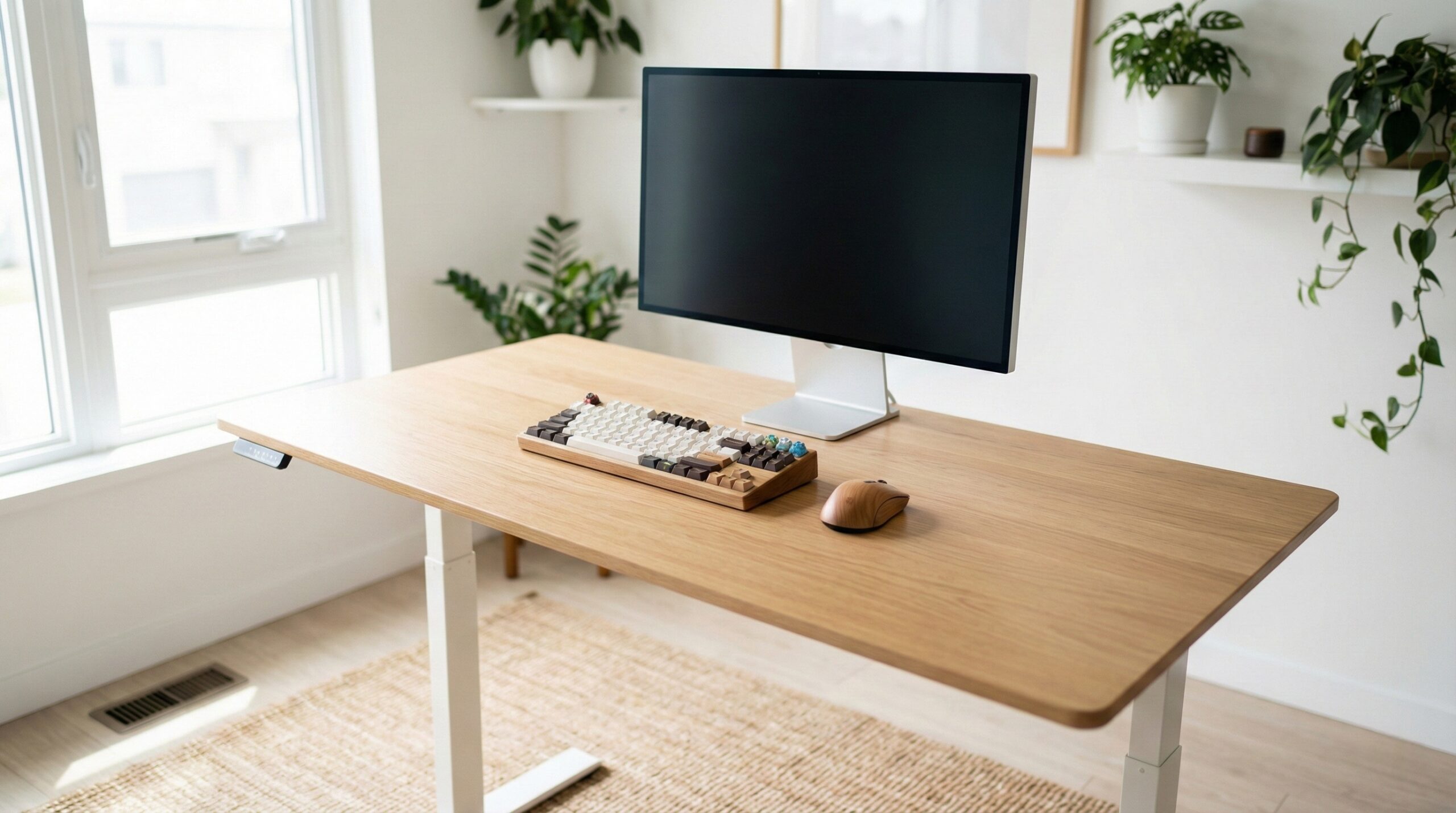
A good bedroom desk is the one that fits your usable footprint (desk + chair pull-out + a safe walkway), stays stable on carpet, and keeps visual clutter low so your room still feels like a place to sleep. For most bedrooms, we’d start around a 39–48 inch wide desk with ~24 inches of depth if you’re using a monitor and keyboard; go smaller only for laptop-only setups.
What a Bedroom Desk Actually Is
A “desk for a bedroom” isn’t a separate desk category so much as a set of constraints: you’re fitting a workstation into a space that also needs circulation, storage, and a sleep-friendly vibe. In practice, that means a bedroom desk is a desk that works within three limits—footprint, ergonomics, and bedroom-appropriate noise/clutter.
Footprint is the big one. Shoppers often measure only the spot where the desktop will sit, then realize later they didn’t account for chair pull-out, the door swing, baseboards, vents, or the space you need to walk past the desk at night. A desk that “technically fits” can still make the room feel cramped if you’re pinching a main pathway. A simple trick: outline the desk with painter’s tape, then add a taped rectangle behind it for chair movement and a clear walkway.
Ergonomics is mostly about depth and setup. Bedroom desks skew smaller, but if the desktop is too shallow, you end up perched at the edge with wrists hanging off, or you push the monitor too close. General workstation guidance from sources like OSHA emphasizes neutral posture (forearms supported, shoulders relaxed, screen placed so you’re not craning your neck). Depth matters because it determines whether you can place a screen at a comfortable viewing distance while still having space for a keyboard and mouse. Laptop-only users can sometimes make ~20 inches work; monitor + keyboard/mouse setups usually feel better around ~24 inches or deeper.
Bedroom-friendly is the part many desk guides ignore. Bedrooms are quiet spaces with more fabric (carpet, rugs, bedding) and often less “work zone” separation. That makes wobble, drawer rattle, and cable clutter more noticeable. Stability is also a safety/durability issue — furniture testing and stability concepts commonly associated with BIFMA-style standards are exactly the sort of thinking that matters here: sturdy frames, tight joinery, and hardware that doesn’t loosen quickly. If you’re considering a standing desk, you’re also bringing motors and moving parts into the room, so you’ll want to think about cord routing and whether late-night height adjustments will bother you (or a partner).
Who a Bedroom Desk Fits Best
A bedroom desk is a great fit if your priority is getting real work done without turning your room into a permanent office. In our experience, these are the scenarios where a bedroom desk works especially well:
- You need a compact weekday workstation. If you mostly use a laptop and maybe a small monitor, a narrower desk can keep your room open while still giving you a dedicated “work landing zone.”
- You share the home and need a door you can close. Bedrooms often provide the quietest space for focus and calls — especially in apartments or with kids at home.
- You’re trying to keep your sleep space calm. Choosing a desk with simple lines, minimal visual clutter, and a plan for cables can help your room feel less like a 24/7 office.
- You can’t drill into walls or build a full office. Renters often lean on freestanding desks plus simple add-ons like adhesive cable clips or an under-desk tray.
Buyer feedback also points to how much satisfaction comes down to “right-sized” expectations. A compact bedroom desk can feel surprisingly polished if it looks good and holds up. For example, one owner of a smaller desk said: “Very happy with this desk.The wood grain looks great.” — verified buyer, 5 stars
If you’re not sure where to start, a practical default for many bedrooms is ~39–48 inches wide, with depth chosen by your setup: closer to ~20 inches for laptop-only, and closer to ~24 inches (or more) for a monitor + keyboard/mouse arrangement.
Who Should Skip a Bedroom Desk
A bedroom desk can be the right compromise — or the wrong one. You may want to skip the whole idea (or at least rethink the desk style) if any of these are true:
- You’re already tight on walking clearance. If adding a desk forces you to squeeze sideways past it, blocks a closet door, or creates a nighttime trip hazard, it’s probably not worth the daily annoyance.
- You need a deep, equipment-heavy workstation. Multi-monitor rigs, large speakers, a bulky printer, or a big tower PC can turn a bedroom desk into a cramped command center fast — especially if the desktop is shallow.
- You’re sensitive to wobble or noise. Bedrooms amplify small annoyances: a desk that wiggles on carpet, a drawer that clacks, or a standing desk that hums can feel louder when you’re trying to wind down.
- You want “sleep-only” boundaries. If you’re working on stress management or sleep hygiene, bringing work into the bedroom may make it harder to mentally switch off.
Also, watch for product listings where specs feel unclear or misleading — especially around weight and what “lightweight” really means. One critical review that captures this kind of mismatch: “The description indicates as 8kg. When I received the item, the metal legs and table top were very heavy and weigh more than 8kg.” — verified buyer, 3 stars
Price and Value
Bedroom desks span a wide price range, and “value” depends on whether you need compact simplicity or full-on workspace capacity.
- Budget compact desks ($40–$50). A small, straightforward desk can be plenty for a laptop setup, light writing, and a single display. In this range, value comes from easy assembly, decent stability for the size, and a finish that doesn’t look cheap up close.
- Large fixed desks ($175–$200). These tend to buy you width and a heavier, more planted feel — useful if you want a bedroom desk that behaves more like a full office desk. The tradeoff is obvious: many bedrooms simply can’t spare the space without sacrificing circulation.
- Standing desks ($350–$400). You’re paying for motors, a lifting frame, and controls. The value question in a bedroom is less “Can it stand?” and more: does the minimum height work for seated typing, is the base stable in a tight room, and are you comfortable with motor noise in a sleep space?
Across prices, stability and ergonomics tend to matter more than fancy storage in bedrooms. A desk that’s the right depth and doesn’t wobble will usually feel like a better buy than one with extra shelves that steal your usable work surface.
Common Mistakes When Trying a Bedroom Desk
Most bedroom-desk regrets come from a few predictable planning misses. Here’s what we’d avoid based on common home office worker reviews and typical room constraints:
- Measuring the desktop footprint but not the “operating footprint.” You need space to pull the chair out and sit comfortably — plus a clear path around the desk. Tape it out on the floor before you buy.
- Going too shallow for your setup. A shallow desk can work for a laptop, but add a monitor and you may end up with the screen too close and your keyboard perched at the edge. If you work long sessions, this is where discomfort tends to show up.
- Ignoring carpet/uneven floors. Bedrooms often have thicker carpet or rugs. That can exaggerate wobble, especially with lighter frames. Plan to re-tighten hardware after the first week and consider leveling feet or shims if needed.
- Choosing storage that steals legroom. Drawer units and shelves can block chair tuck-in, bang your knees, or force you to sit off-center. In a bedroom, “less but smarter” storage often wins.
- Not planning cable management from day one. Bedrooms are where cables become visual clutter fast — plus they can create trip hazards around the bed. Even a simple under-desk tray and adhesive clips can make the whole setup feel calmer.
Assembly is another spot where expectations matter. Some owners are pleasantly surprised when instructions are clear and the build goes quickly, like this report: “The assembly instructions were amazingly easy to follow. I assembled it myself in about an hour.” — verified buyer, 5 stars
FAQ
What size desk fits best in a typical bedroom?
Start with the maximum space you can spare while keeping a clear walkway and enough chair pull-out room. For many bedrooms, a desk around 39–48 inches wide is a practical starting range. Depth depends on your setup: laptop-only users can sometimes make ~20 inches work, but monitor + keyboard/mouse setups usually feel better around ~24 inches or more.
Is a 20-inch-deep desk enough for working from home?
It can be enough for a laptop and light writing, especially if you don’t use a separate keyboard and mouse. If you use an external monitor, a deeper surface often helps you keep the screen at a comfortable viewing distance while maintaining a neutral typing posture — consistent with the general workstation setup principles in OSHA computer workstation guidance.
How do I stop a desk from wobbling on carpet?
First, fully tighten hardware after assembly, then check it again after a week (carpet compresses and fasteners can settle). If the desk has adjustable feet, use them; if not, shims can help on uneven floors. A hard chair mat under the chair/desk zone can also reduce rocking and make rolling easier.
Should I get a standing desk if my desk has to be in the bedroom?
Only if you’ve confirmed three things: the desk’s minimum height works for comfortable seated typing, the base won’t block tight walkways, and you’re okay with motor noise in a sleeping space. Also follow basic safety practices — manage cords to prevent pinch/trip hazards and keep kids/pets clear during movement, in line with general ergonomics and injury-prevention concepts discussed in NIOSH ergonomics resources.
What desk height should I aim for with my chair?
Aim for a setup where your shoulders feel relaxed and your elbows bend comfortably while typing (not shrugged up, not reaching down). Many fixed desks hover around ~29 inches tall; the better question is whether your chair height and armrests let you sit close enough and keep forearms supported. If you’re consistently uncomfortable, it can be worth consulting a certified ergonomist or occupational therapist for individualized guidance.
How can I keep a bedroom desk from looking cluttered?
Pick one small “catch-all” (a shallow drawer, tray, or bin), then route cables off the floor using clips or an under-desk tray. Keep only daily-use items on top, and move everything else into closed storage. If you add vertical storage, keep it minimal so the area doesn’t feel visually busy — especially important in a space meant for rest.
What should I look for in a sturdy desk build?
Look for a stable frame design (wider stance, solid joints), quality hardware, and ideally leveling feet. While consumers don’t “buy a standard,” durability and stability concepts are central to furniture performance testing — often discussed in the context of BIFMA standards and testing. In a bedroom, that sturdiness also helps reduce rattles and vibration.
Looking for these on Amazon? Browse desk for bedroom on Amazon →
Bottom Line
The best bedroom desk is the one that fits your real day-to-day footprint, supports neutral posture, and stays stable on carpet without adding visual noise to the room. Measure with chair clearance in mind, choose depth based on your actual gear, and prioritize sturdy construction and simple cable management over extra features you won’t use.
Affiliate disclosure: This page includes affiliate links. Purchases through these links support our work at no added cost.