TL;DR
The best home office desk is usually the smallest model that still gives you enough width, depth, and legroom for your real setup. For most people, a simple open desk around 55 inches wide offers the safest balance of workspace, comfort, flexibility, and fewer assembly headaches, while larger drawer desks make more sense only if you truly need built-in storage.
What a Home Office Desk Actually Is
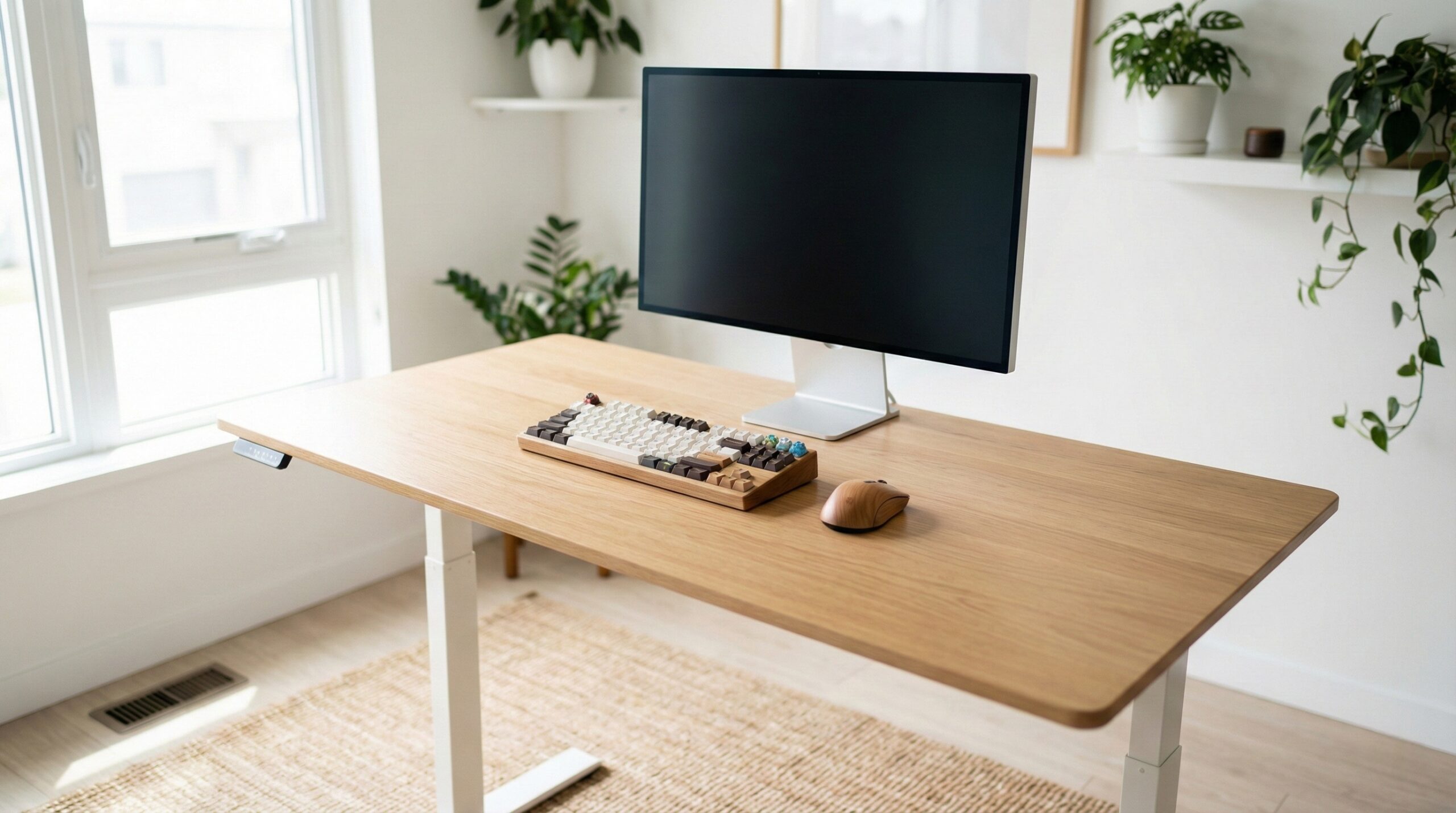
A home office desk is more than a flat surface with four legs. In practice, it is the base of your workstation: the piece that determines where your monitor sits, how your keyboard and mouse line up with your shoulders and elbows, how much room your chair has to move, and whether the whole setup feels calm or cramped after a full day.
That is why the right desk is not just about style or even width alone. In a home office, the formula is usually footprint + depth + clearance + storage + build quality.
Footprint is the amount of floor space the desk takes up. This matters if you are working in a bedroom, spare corner, apartment nook, or shared room. A desk that looks compact in photos can still make a room feel crowded if it blocks chair movement, outlet access, or a door swing.
Depth is often the overlooked spec. Many low-cost desks are wide enough for a laptop but too shallow for a monitor, separate keyboard, mouse, and a little writing space. Research and ergonomics guidance from OSHA computer workstations and Cornell ergonomics research both point toward workstation fit as a major part of comfort. If your desk is too shallow, your monitor may end up too close, or your keyboard may sit in an awkward reach zone.
Clearance means usable space underneath the desktop. Drawers, support bars, and side cabinets can eat into knee room even when the desktop itself looks generous. If you like to cross your legs, tuck in your chair, or shift position throughout the day, under-desk space matters a lot.
Storage is the tradeoff category. Built-in drawers can reduce visual clutter and keep chargers, notebooks, and paper out of sight. But they also reduce flexibility and can create more assembly issues. Open desks usually leave more freedom for rolling carts, filing cabinets, PC towers, and future monitor changes.
Build quality decides whether the desk feels steady or annoying. Better hardware, cleaner panel finishing, and stronger frames tend to mean less wobble and fewer chipped edges. BIFMA standards are relevant here because they reflect furniture expectations around durability, stability, and safety, even when a given desk is more budget-focused.
In short, a home office desk is not just furniture. It is a workstation platform, and the best one is the one that fits your body, your gear, and your room without creating daily friction.
Who Home Office Desks Fit Best
Home office desks fit best when buyers start with how they actually work, not just how they want the room to look. If you use a laptop only, work part time from home, or need a desk in a bedroom or shared space, a compact desk can be enough. Around 31 inches wide can work for light use, especially if your setup stays simple and you do not need to spread out papers or accessories.
If you use a monitor, separate keyboard, mouse, notebook, and maybe a lamp or speakers, a mid-size desk is usually the safer choice. For many people, this is the sweet spot: enough surface area to feel settled, but not so much furniture that the room starts feeling heavy. Buyer feedback on the 55-inch Huuger model reflects this step-up well: “I needed something bigger for a desk at home, trying to run a multi-screen PC setup using a too-small hand-me-down desk and a TV TRAY (I kid you not) was really starting to grate on me.” — verified buyer, 5 stars.
A large desk with drawers fits best for a dedicated office where storage matters as much as workspace. If you handle paperwork, keep supplies at arm’s reach, or want a cleaner look with less visual clutter, an integrated storage desk can make sense. That style also works well for people who know their layout is stable and do not plan to move equipment around often. One owner summed up the appeal of a large drawer desk this way: “Love the amount of desktop space for when i’m working on a project plus for my purry invader to lie down.” — verified buyer, 5 stars.
These desks are also a good fit for buyers trying to build around basic ergonomics. Guidance from OSHA, Mayo Clinic ergonomics advice, and Cornell all point in the same direction: your desk should help you keep your screen, keyboard, and mouse in workable positions without forcing reach or crowding. That does not mean every buyer needs a huge desk. It means the desk should match the size of your tools and the length of your work sessions.
In practical terms, home office desks fit best for:
- Remote workers who spend several hours a day at one station
- Buyers replacing a too-small student desk or temporary table
- People who need better legroom than many drawer-heavy desks provide
- Small-space users who can be realistic about a compact setup
- Anyone planning a monitor-based workstation rather than laptop-only use
If your goal is comfort over a full workday, it is worth measuring for the desk you will need six months from now, not just the one that barely fits your current laptop.
Who Should Skip Home Office Desks
You should skip a conventional fixed desk if your needs are unusually specific and a standard model will not solve the real problem. For example, if you are trying to address ongoing discomfort, posture issues, or pain during long desk sessions, the desk itself may be only one part of the answer. In those cases, it may be smarter to check with a certified ergonomist or occupational therapist and review guidance from CDC NIOSH ergonomics before buying based on looks alone.
Very small desks are also easy to overbuy in the wrong direction. They are best for laptop-first setups, not for buyers who expect to add a monitor, printer, notebooks, and accessories later. Home office worker reviews on compact desks show that low price often comes with finish compromises. One critical buyer report on the small DUMOS desk says, “Terrible quality: the entire surface is scratched and smeared with paint. The table doesn’t match the photos.” — verified buyer, 1 star.
You may also want to skip desks with built-in drawers if legroom is a top priority. They look tidy, but center drawers, side cabinets, and support rails can make seating positions less natural. That matters if you are tall, use wider chair armrests, or like to move throughout the day.
Buyers should also be cautious with large storage desks if they do not enjoy assembly or cannot manage heavy boxes. Drawer alignment is a recurring issue in user reports, especially on budget-to-midpriced furniture that arrives flat-packed. A direct example from a large desk owner: “I bought 7 of these desks and all of them the top drawer is misaligned. You have to lift the drawer to get it to push it completely in.” — verified buyer, 3 stars.
Finally, skip a desk purchase entirely for now if you have not measured your room, chair clearance, and gear. Width is the easiest spec to shop, but depth and under-desk clearance are often what determine whether the desk actually works. If you are guessing, you are much more likely to end up with something that fits the wall but not your workday.
Price and Value
Home office desks cover a wide range, but the three common value tiers are easy to understand.
Budget compact desks around $20 to $30, like the DUMOS 31-inch model, are mainly about getting a basic work surface into a tight space for as little money as possible. At that price, expectations should stay realistic. They can work well for a laptop, occasional admin tasks, or a temporary room setup, but buyer feedback suggests you should watch closely for finish flaws, scratches, and less premium materials.
Budget-to-lower-midrange open desks around $50 to $75, like the 55-inch Huuger desk, often hit the best value point for most shoppers. This range tends to buy you enough width for a monitor-based setup, better legroom than drawer desks, and simpler assembly. If your priority is day-to-day usability rather than built-in storage, this is usually where the smart money goes.
Larger storage desks around $300 to $350, like the Bush 72-inch desk with drawers, are a more deliberate purchase. You are paying for a much larger footprint and integrated storage, not just a better place to set a laptop. That can absolutely be worth it in a dedicated office, especially if you want paperwork hidden away. But value depends heavily on whether the drawers work smoothly, the parts arrive intact, and the desk still leaves enough comfortable legroom.
In other words, higher price does not automatically mean better fit. A $60 open desk can be a better value than a $325 drawer desk if your main needs are monitor space, knee clearance, and easy setup. On the other hand, a larger desk with drawers may justify the extra cost if it replaces separate storage furniture and helps keep your office more functional.
The best way to judge value is to ask three questions:
- Does the desk fit my actual equipment without crowding?
- Will the under-desk space be comfortable for long sessions?
- Am I paying for features I will truly use, like drawers or extra width?
If the answer to the third question is no, a simpler desk is often the better buy.
Common Mistakes When Trying Home Office Desks
The most common mistake is shopping by width alone. A desk can sound roomy because it is 55 inches or even 72 inches wide, but if the depth is shallow or the underside is blocked by drawers and braces, it may still feel cramped. For monitor users, depth is especially important because it affects viewing distance and hand placement. Guidance from OSHA workstation chairs and broader workstation ergonomics guidance both support building enough space for neutral positioning rather than forcing your body to adapt to the furniture.
Another mistake is underestimating future gear. A desk that fits just your laptop today may feel inadequate the moment you add a standalone keyboard, monitor arm, speakers, or a stack of notebooks. This is why slightly sizing up often pays off if the room allows it. As one buyer put it when moving to a larger desk, “I needed something bigger for a desk at home, trying to run a multi-screen PC setup using a too-small hand-me-down desk and a TV TRAY (I kid you not) was really starting to grate on me.” — verified buyer, 5 stars.
A third mistake is assuming drawers are always a benefit. They can be, but they often come with tradeoffs: less knee room, more parts to assemble, and more opportunities for alignment issues. Home office worker reviews repeatedly point to drawer function as a weak spot on some larger desks. If hidden storage is not essential, a plain table-style desk is usually the safer and less frustrating route.
Many buyers also ignore chair fit. Your desk is not working in isolation. If your armrests hit the apron, your chair will not slide in, or your knees bump a support rail, comfort drops quickly. Measure your seated height and chair width before buying, especially if your current chair is wider or more adjustable than average.
Another avoidable mistake is not checking load needs. If you use dual monitors, a heavy desktop PC, speakers, or clamp-on accessories, confirm the desk is appropriate for that setup and inspect all parts for damage before assembly. Loose hardware and bent components are common causes of wobble. Assemble carefully, fully tighten fasteners after setup, and place the desk on a level floor.
Finally, do not confuse “looks clean in photos” with “works well every day.” Compact desks can photograph beautifully in staged rooms while still being too shallow or lightly finished for real work. A blunt buyer comment on a budget small desk captures that risk: “Terrible quality: the entire surface is scratched and smeared with paint. The table doesn’t match the photos.” — verified buyer, 1 star.
The practical fix is simple: measure first, buy for your gear, and treat storage and style as secondary to usable workspace.
FAQ
What size desk is best for a home office?
The best size is the smallest desk that still fits your equipment and gives you comfortable chair movement. For laptop-only use, a compact desk around 31 inches wide may be enough. For a monitor, full keyboard, mouse, and some writing space, many buyers are better served by something around 55 inches wide or more. If you use dual monitors or spread out paperwork regularly, a larger desk can make sense.
Is a 31-inch desk enough?
It can be enough for light use, especially in a small bedroom office, dorm-style nook, or shared workspace. But it is usually best for a laptop or very compact single-screen setup. Once you add a separate keyboard, mouse, notebook, or monitor, many people start to feel cramped. If you expect your setup to grow, moving up a size early is often the better long-term decision.
How much desk depth do I need for a monitor setup?
In general, more depth is better than less for monitor users. Shallow desks can push your screen too close and leave little room for your hands or notes. Ergonomics guidance from OSHA computer workstations and Cornell ergonomics research suggests your workstation should let you place screen and input devices in comfortable positions without awkward reach. If you use a monitor arm, remember that clamp hardware and arm reach can also affect usable depth.
Are desks with drawers better for home offices?
They are better if your main goal is hidden storage and a cleaner visual setup. Drawers are useful for paperwork, chargers, pens, and small office tools. But they are not automatically better for comfort. They often reduce legroom, limit chair movement, and add assembly complexity. If you value flexibility, easy cable routing, and open knee space, a plain desk is usually the safer choice.
Do cheap home office desks hold up well?
Some do well enough for basic use, but budget desks often involve tradeoffs in finish quality, material feel, and long-term stability. User reports commonly mention scratched tops, chipped edges, thinner panels, or a less substantial feel. That does not mean every low-cost desk is a bad buy. It means buyers should expect a more basic product and read reviews closely for recurring complaints.
How important is legroom under a desk?
Very important, especially if you work full days at home. Under-desk clearance affects whether you can shift position, cross your legs, and sit close enough to your keyboard without strain. Drawers, aprons, and support bars can all reduce usable space. If you are tall or use a larger office chair, check under-desk dimensions carefully rather than relying only on desktop size.
Should I choose a simple desk or a storage desk?
Choose a simple desk if flexibility, monitor space, and legroom matter most. Choose a storage desk if you strongly value keeping clutter out of sight and know you will use the drawers every day. For many buyers, an open desk plus a separate rolling cart or small filing cabinet offers a better balance than committing to a drawer-heavy desk from day one.
What should I check before buying a desk online?
Measure your wall space, chair pull-back room, and the width and depth of your equipment first. Then check under-desk clearance, desktop depth, assembly feedback, and reports of wobble or shipping damage. If you plan to use multiple monitors or clamp-on accessories, make sure the desk suits that load and shape. In homes with children, consider anti-tip precautions for larger desks with drawers.
Looking for these on Amazon? Browse desk for home office on Amazon →
Bottom Line
The right home office desk is the one that fits your room, supports your equipment comfortably, and leaves enough legroom to work without feeling boxed in. For most buyers, a simple mid-size open desk offers the best mix of value, flexibility, and fewer assembly problems, while larger drawer desks are worth the extra cost only when built-in storage is a real need.
Affiliate disclosure: This page includes affiliate links. Purchases through these links support our work at no added cost.