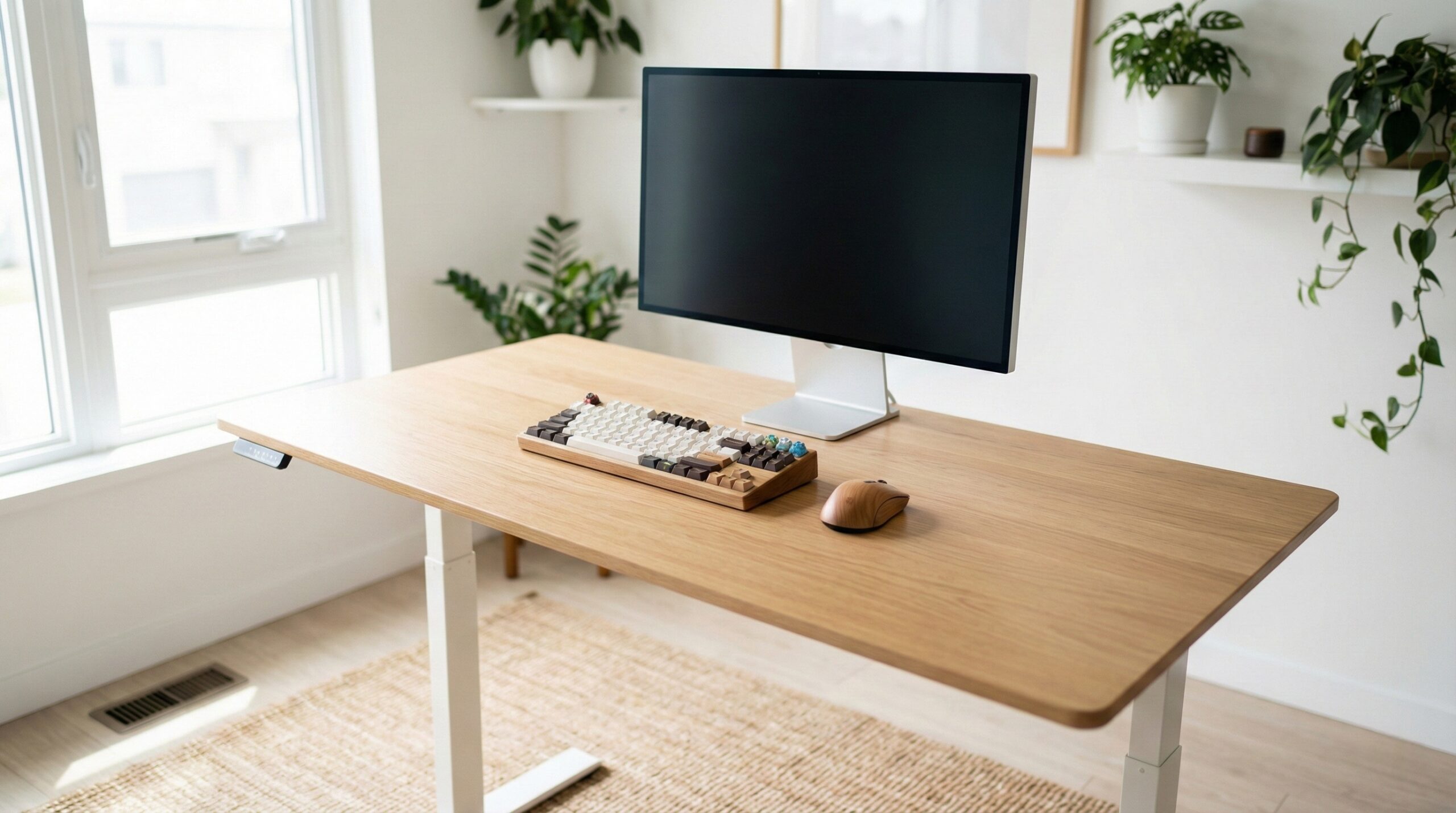
TL;DR
A “wood standing desk” can be a solid hardwood/butcher-block top, bamboo, or simply a wood-look surface — and the right pick depends less on the top and more on the frame’s stability and weight capacity. If you want the most durable, refinishable surface, go thicker real wood (hardwood/butcher block) and pair it with a high-capacity, stability-focused frame; if you want the easiest care and better price-to-performance, a quality wood-look laminate is often the best value.
What a Wood Standing Desk Actually Is
In shopping terms, “wood standing desk” is a catch-all phrase that can describe several very different desktop materials. That matters because the top’s material affects not just how the desk looks, but how heavy it is (important for lifting), how it resists dents and scratches, and whether you can repair it years down the road.
Here are the most common “wood” top types you’ll see:
- Solid hardwood: Usually a single wood species (or wide glued panels). It tends to feel the most premium, and it’s often refinishable if you scratch or stain it. It’s also heavier and pricier.
- Butcher block: Typically made from many wood staves glued together. It’s “real wood,” generally thick, and often refinishable — great for longevity, but also heavy.
- Bamboo: Bamboo tops are usually laminated strips. They’re often lighter than thick hardwood and can be a solid middle ground on price and stiffness, but edge durability and factory finish quality vary a lot from desk to desk.
- Wood-look laminate: This is typically a printed wood grain layer over MDF/particleboard. It’s usually the easiest to live with day-to-day (wipes clean, consistent appearance), and can be a strong value. The tradeoff: you generally can’t sand and refinish it like real wood.
One more reality check: on a standing desk, the lifting frame often determines your day-to-day experience more than the desktop does. Height range, wobble at standing height, lifting smoothness, and usable weight capacity all come primarily from the base. This is especially important with wood tops because wood surfaces — particularly thick butcher block — add a lot of mass. A desk can be rated to lift a heavy top and still feel shaky when you type or when a monitor arm moves.
Finally, consider depth and leverage. Many wood desktops are deeper (30″ is common, sometimes more). Deeper tops are great for monitor distance and arm clearance, but they can also increase front-to-back sway if the frame isn’t designed for that footprint.
Who a Wood Standing Desk Fits Best
A wood standing desk tends to make the most sense if you care about feel, acoustics, and long-term surface wear—not just getting from sitting to standing. In a home office, a real-wood top can look more like furniture than office equipment, and it can be more forgiving over time because many scratches can be sanded out (depending on finish and material).
We’d most strongly consider a wood standing desk if you’re in one of these scenarios:
- You want a premium surface that can age with you. If you plan to keep the desk for years and don’t want to baby it, thicker real wood (hardwood/butcher block, and sometimes bamboo) can be the “buy once” route — especially if you’re comfortable with occasional maintenance.
- You use monitor arms or heavier gear. A sturdy, thicker top can handle clamp pressure better than thin desktops, and it’s less likely to feel “drummy” when you type. You still need a stable frame, but a solid top helps the whole setup feel more substantial.
- You’re sensitive to wobble and want a more planted feel. The top alone doesn’t fix wobble, but many buyers who choose heavier wood tops are also choosing stronger frames and wider footprints, which can improve the overall feel at standing height.
- You care about aesthetics in a visible room. If your desk sits in a living room corner, a den, or an open-plan space, wood (or good bamboo) often looks more “intentional” than typical office laminate.
Even among wood-top shoppers, value can vary widely. For example, a higher-end configuration like the UPLIFT DESK V2-Commercial Dark Bamboo 72 x 30 Desk is aimed at buyers who want a big, furniture-like surface and are willing to pay for it. Meanwhile, some more affordable desks use a wood-look top and put the money into convenience features (drawers, LEDs, etc.) rather than premium surface material.
Important ergonomics note: whichever top you choose, fit matters. Evidence-based ergonomics guidance generally emphasizes neutral wrist posture, relaxed shoulders, and appropriate monitor height — things you can only achieve if your desk height range fits your body and your chair. For a quick refresher, see OSHA computer workstation guidance and the broader background on risk factors from NIOSH ergonomics resources. If you’re dealing with pain or recurring strain, it can be worth consulting a certified ergonomist or occupational therapist for individualized setup advice.
Finally, because the provided product review data doesn’t include verbatim public-review quotes for these specific listings, we can’t include an attributed owner quote in this section.
Who Should Skip a Wood Standing Desk
Wood tops are not automatically “better”—they’re simply a different set of tradeoffs. We’d think twice (or choose wood-look laminate instead) if any of the following sound like you:
- You want a low-maintenance, worry-free surface. Real wood can be sensitive to heat, moisture, and abrasion depending on finish. If your desk is where coffee mugs sweat, kids do homework, or you frequently eat at your desk, laminate is often less stressful.
- Your floor is soft or uneven. Thick carpet and uneven surfaces can magnify wobble at standing height. Leveling feet help, but they won’t fully compensate for an underbuilt frame — especially with a heavier top.
- You plan to move often. Solid wood and thick tops add significant weight. If you relocate apartments regularly, a lighter top (or modular system) can be more practical.
- Your budget is tight. A wood top can push a standing desk into a much higher price tier. If the choice is “wood top on a wobbly frame” versus “stable frame with a laminate top,” stability usually wins for daily comfort.
Safety-wise, remember that any sit-stand desk introduces pinch/crush risk during travel, and tip-over risk increases at standing height — particularly with heavy monitor arms or weight concentrated toward the front edge. Keep the travel path clear, manage cables so they can’t snag during motion, and follow the manufacturer’s load guidance.
Because the provided product review data doesn’t include verbatim public-review quotes for these specific listings, we can’t include an attributed critical quote in this section.
Price and Value
Wood standing desk pricing spans a surprisingly wide range, mostly based on (1) the top material/thickness, (2) the frame quality, and (3) size.
- Premium wood/bamboo on a commercial-grade frame: The UPLIFT DESK V2-Commercial Dark Bamboo 72 x 30 Desk is listed around $1500–$1600 for this configuration. At this tier, you’re typically paying for a large desktop, heavier-duty frame components, and a more furniture-like finish.
- Budget-to-midrange “wood look” standing desks: The Claiks 63in L-Shaped Standing Desk with Drawers & LED is listed around $350–$400. Desks in this range often compete on included features (like storage or lighting) and overall footprint, rather than premium solid-wood materials.
Value is about matching the desk to your real use. If you type a lot, run multiple monitors, and stand for hours, paying more for a stable frame can feel worth it every day. If you mostly want occasional standing and a desk that looks good on camera, you can often get what you need for less — especially with a laminate or thinner bamboo-style top.
If you’re trying to stretch a budget, prioritize these “value drivers” in order:
- Stability at standing height (wobble control matters more than raw lifting power)
- Height range that fits you (especially if you’re petite or very tall)
- Weight capacity with margin (top + gear, not just your laptop)
- Top thickness and finish quality (especially if you clamp monitor arms)
If you see claims about durability/testing, one common benchmark in the category is ANSI/BIFMA X5.5 for desk products (the full standard can be paywalled, but you can look for manufacturers that reference it by name when discussing testing and performance).
Common Mistakes When Trying a Wood Standing Desk
Most “wood standing desk disappointment” comes from mismatches: a heavy top on a frame that isn’t stable enough, or a finish that doesn’t match how you actually use your desk. Here are the most common pitfalls we see from home office buyer feedback patterns in this category:
- Underestimating total load. Don’t just count monitors and a laptop — add the desktop weight itself (wood can be heavy), monitor arms, speakers, a desktop PC, and anything mounted under the desk (power strips, drawers, cable trays).
- Assuming the weight rating guarantees stability. A desk may lift the load but still wobble when you type or when a monitor arm moves. Dynamic movement exposes weaknesses that static “lbs” numbers don’t.
- Buying a deeper/wider top without checking frame compatibility. Large tops increase leverage and can amplify sway. Look for frames designed for the footprint you want, with wide feet and strong cross-bracing if available.
- Skipping finish planning. Wood tops can show heat rings, water marks, and scratches depending on finish. If you don’t want to think about coasters, desk mats, and wiping spills quickly, a laminate top is often a better fit.
- Getting surprised by drilling/mounting. Some tops arrive predrilled; others don’t. If you’re pairing a separate top with a separate frame, you may need to measure, pilot-drill, and choose screw lengths carefully to avoid splitting wood or punching through the finished surface.
- Over-clamping monitor arms on softer or thinner tops. Clamp pressure plus leverage can dent or compress wood fibers. Consider protective plates, and ensure your top thickness works with the clamp’s range.
If you’re new to dialing in an ergonomic workstation, a good “first principles” check is making sure keyboard/mouse height supports neutral wrists and relaxed shoulders, and your monitor height reduces neck flexion. The OSHA computer workstation guidance is a practical starting point.
Because the provided product review data doesn’t include verbatim public-review quotes for these specific listings, we can’t include an attributed owner quote in this section.
FAQ
Is bamboo considered “wood” for a standing desk?
Bamboo is technically a grass, but in desk shopping it’s commonly treated as a wood alternative because it’s used in laminated panels similar to wood. In practice, bamboo tops can be lighter than thick hardwood and still fairly stiff, but finish quality and edge durability vary by brand — so it’s worth reading buyer feedback closely and protecting the surface (coasters/mats) if you’re hard on desks.
What top thickness is best for a wood standing desk if I use a monitor arm?
Thicker is generally better for rigidity and screw-holding, especially with heavy single or dual monitor arms that create clamp pressure and leverage. That said, “best” depends on your arm’s clamp range and the desktop construction (solid wood vs engineered core). If you’re clamping a large arm, confirm (1) the clamp opening range fits the thickness and (2) the top is stiff enough not to flex or dent at the clamp point.
How do I know if a standing desk frame is strong enough for a butcher block top?
Start by estimating total weight: butcher block + everything on the desk + anything mounted underneath. Then check the frame’s rated capacity and leave margin. Also consider stability features (wider feet, more rigid columns, cross support), because a frame can be “strong enough” to lift but still shaky at standing height. If the brand mentions testing to ANSI/BIFMA standards such as BIFMA X5.5, that can be a helpful quality signal.
Do I need a predrilled wood top, or can I mount any wood top to any standing desk frame?
You don’t strictly need a predrilled top, but predrilled holes reduce the chance of alignment mistakes and speed up assembly. If you’re mounting a separate top to a separate frame, make sure the frame’s mounting pattern matches where you can safely place screws, use pilot holes, and confirm screw length so you don’t break through the desktop surface.
What finish is easiest to maintain for a desk surface that sees coffee and water?
In general, a sealed, film-forming finish (often polyurethane or lacquer) is easier day-to-day because it resists moisture and wipes clean. Oil/wax finishes can look great, but they typically require periodic reapplication and can be more vulnerable to water marks if spills sit. If you want the lowest stress option overall, a quality laminate “wood look” top is usually the most forgiving for liquids and daily mess.
Is standing all day better than sitting all day?
Usually the goal is to alternate positions rather than stand nonstop. Ergonomics guidance commonly emphasizes reducing prolonged static postures and keeping joints in neutral positions. For practical setup tips (monitor height, keyboard position, and posture basics), see OSHA computer workstation guidance and the broader background on risk factors at NIOSH ergonomics resources.
How can I reduce wobble with a heavy wood top?
First, make sure the desk is level (use leveling feet if included). Place the desk on the most solid surface available; thick carpet can worsen sway. Keep heavy items centered rather than perched at the front edge, and consider how monitor arms move the load. If wobble persists, it’s often a frame limitation — at that point, a sturdier base (or a smaller/deeper top that matches the frame’s design) is the real fix.
Bottom Line
A wood standing desk can be an excellent home office upgrade when you match the top material to your lifestyle (real wood for refinishability, laminate for easy care) and match the frame to the top’s weight and size. If you prioritize stability, confirm your total load, and plan for finish care, you’ll end up with a desk that looks great and feels solid at both sitting and standing heights.