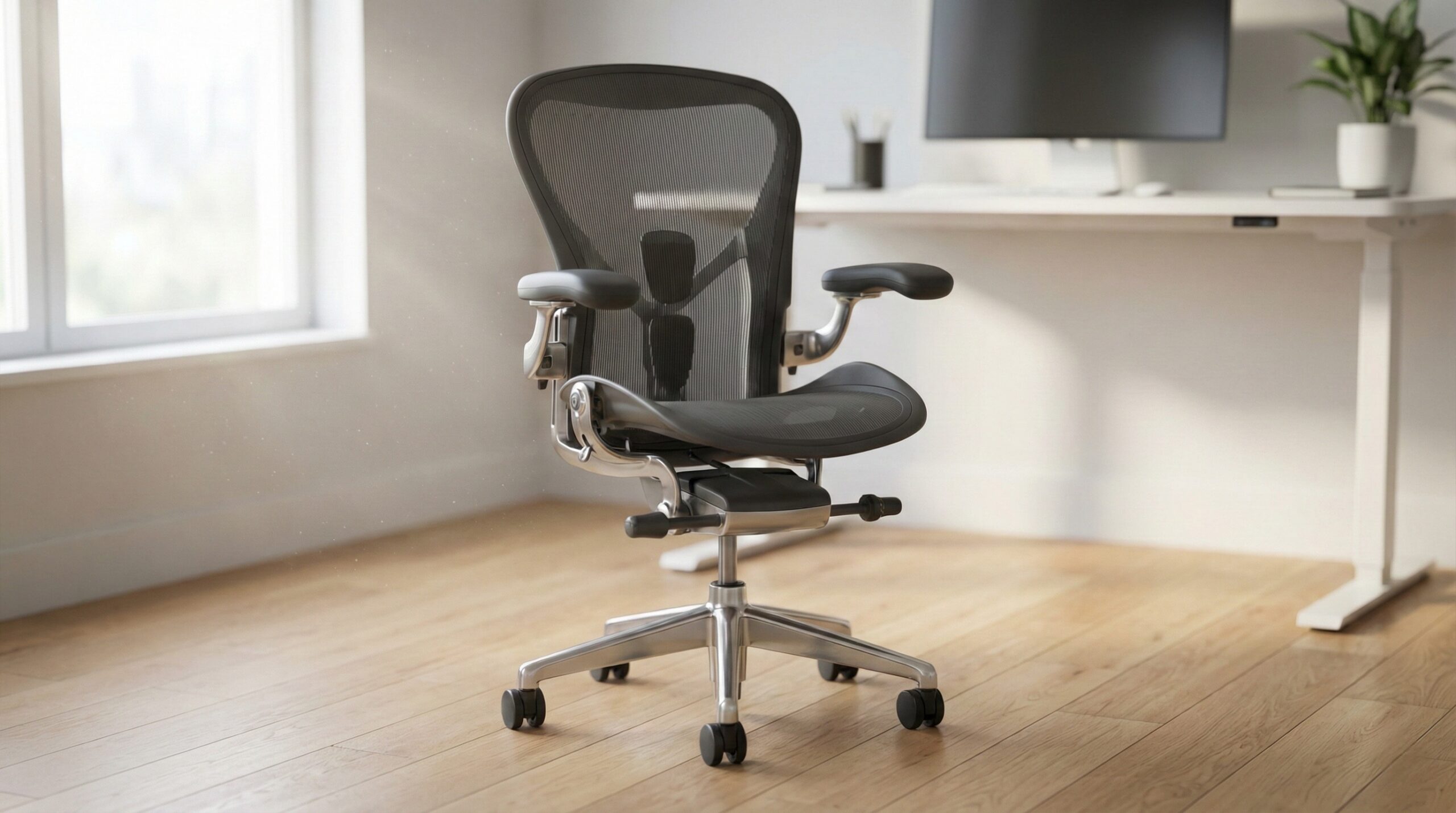
TL;DR
If you’re tall, the “best” office chair is the one that lets you set seat height and seat depth so your feet are supported, your knees land near 90°, and your thighs are supported without pressure behind the knees. In practice, that means prioritizing adjustability (seat height, seat depth, arms, and back/head fit) over “big and tall” labels or weight capacity alone.
Top Recommended Ergonomic Seating
| Product | Best For | Price | Pros/Cons | Visit |
|---|---|---|---|---|
| GABRYLLY Ergonomic Office Chair High Back Mesh Desk Chair | Tall users wanting a high-back mesh feel | $200 – $225 | High-back support with strong buyer feedback; may run too tall for shorter users | Visit Amazon |
| HYLONE Big and Tall 400lbs Heavy Duty Office Chair | Tall, broader frames on a lower budget | $125 – $150 | Higher sitting position and thick cushion; armrests are a common comfort complaint | Visit Amazon |
| Premium Ergo Office Chair C7 Max | Premium DTC option if you want brand support | $400 – $460 | Reputable DTC brand signal via third-party reviews; you must confirm tall-fit dimensions before buying | Visit FLEXISPOT |
Top Pick: Best Overall Ergonomic Seating
GABRYLLY Ergonomic Office Chair High Back Mesh Desk Chair
Best for: a 6’2″ – 6’6″ home office worker who wants a tall-friendly high-back mesh chair for long computer days and frequent recline breaks.
The Good
- High-back design can be a better match for taller users who feel “cut off” at the shoulder blades on mid-back chairs.
- Buyer feedback repeatedly points to straightforward setup, which matters when you need to dial in fit quickly (seat height, arms, tilt tension) and don’t want guesswork.
- Mesh-style build is often a plus if you run warm, since taller users tend to have more back-to-backrest contact area.
- Good overall “tall-leaning” geometry for typical desk work (keyboard and mouse for 6–10 hours), especially if you’re trying to avoid slouching to meet the backrest.
The Bad
- Multiple reviews suggest it can feel too tall at minimum settings for shorter users, which is a hint that the fit window skews upward.
- “High back” doesn’t guarantee perfect tall ergonomics — head/neck comfort still depends on your torso length and where the top of the back hits you.
4.5/5 across 14,330 Amazon reviews
“ASSEMBLYAmong the chairs I’ve assembled over the years, the neatness of the manual’s instructions, straightforward assembly and pre-assembly of parts as much as possible to save a customer time as well as verified and correctly labeled part numbers comes as a surprise.The parts come in a packet with transparent front and you simply take out the parts step…” — Verified Amazon buyer (5 stars)
“I had to write a review after spending so much on this chair. I’ve never bought one this expensive before, and the reviews had me ready to open my wallet. So I’m here to join the chorus to tip you over the edge if you’re wavering.First things first: The Cons.At 5’4", I’m the shortest person who should buy this chair. With the arms completely down and the…” — Verified Amazon buyer (4 stars)
Typical price: $200 – $225
“Among the chairs I’ve assembled over the years, the neatness of the manual’s instructions, straightforward assembly and pre-assembly of parts as much as possible to save a customer time as well as verified and correctly labeled part numbers comes as a surprise.” — verified buyer, 5 stars
Our Take: For most tall shoppers, this is the safest starting point in this list because it’s built around a higher-back feel and has the strongest tall-leaning buyer feedback — just be ready to fine-tune your seat depth and arm height so your legs and shoulders both land comfortably.
HYLONE Big and Tall 400lbs Heavy Duty Office Chair
Best for: a tall, broader-framed user in a shared home office who wants a sturdier, thicker-cushion feel and doesn’t mind adding simple accessories like armrest covers.
The Good
- Designed and marketed for “big and tall” use, which often correlates with a higher sitting position that can help long legs.
- Home office worker reviews call out a wide, thick cushion — helpful if you dislike firm seats or bottom out thinner foam.
- Several buyers note it sits higher than their old chair, which can be a win when your knees feel too bent on standard cylinders.
- Budget-friendlier pricing for people who want a heavier-duty vibe without jumping into premium chair pricing.
The Bad
- Armrests are a consistent complaint in buyer feedback, including being uncomfortably hard.
- Depending on your desk height, the higher seat position may force a footrest (or a keyboard tray) to keep your feet supported and shoulders relaxed.
4.6/5 across 621 Amazon reviews
“This chair was easy to assemble with clear instructions. I am over 250 lbs and short so had my doubts about whether this would work. While this does sit higher (at the lowest setting) than my previous chair, I found that using a footrest is very comfortable. The chair cushion is wide and thick. There is a lumbar pillow that is inserted into the back of the…” — Verified Amazon buyer (5 stars)
“The chair is comfortable; however, armrest is beyond uncomfortable. The armrest is super hard to the point that I purchased an armrest memory foam cover to help with the hard armrest. I expected more for the price.” — Verified Amazon buyer (3 stars)
Typical price: $125 – $150
Our Take: If you’re tall and want a more cushioned, heavy-duty-style chair for a long workday and occasional leaning back to read or game, this one can make sense — but plan for armrest comfort fixes and double-check that your feet can stay supported at your preferred typing height.
Premium Ergo Office Chair C7 Max
Best for: a tall remote worker who prefers buying from a direct-to-consumer brand (support, parts, returns) and is willing to verify dimensions carefully before committing.
The Good
- Strong third-party brand signal: FlexiSpot is rated on Trustpilot, which can be useful when you’re weighing customer service and delivery experiences (not just chair comfort).
- A DTC alternative if you don’t want to shop purely on Amazon listings and reviews.
- Potentially a better path if you care about ecosystem support (matching standing desks, accessories, and replacement parts through one brand).
The Bad
- Tall-person fit is not guaranteed from the name alone — you’ll want to confirm seat height range, seat depth, and back/head height from the brand’s posted dimensions.
- Higher price tier means returns and fit-testing matter more; read the brand’s policy before you treat it like a “try it and see” purchase.
4.5/5 across 6,149 Trustpilot reviews (source)
Price: $400 – $460
Our Take: If you want a premium-leaning option and value buying from a known DTC brand, this can be worth a look — but for tall ergonomics, you should only buy after you confirm the actual chair dimensions match your leg length and torso length.
FAQ
What seat height do tall people need?
A useful target is a seat height that lets you sit with your feet supported and your knees near a 90° angle (or slightly more open), without having to point your toes. OSHA’s workstation guidance emphasizes neutral joint positioning and proper chair height as part of a safer computer setup; see OSHA computer workstation guidance. If the chair must be raised to fit your long legs but then your feet float, a footrest can be the correct fix — not “forcing” a lower seat that bends your knees too much.
How deep should the seat be for tall users?
Deeper thighs usually need a deeper seat pan, but you still want clearance behind the knees — commonly described as about 2–3 fingers between the seat edge and the back of your knee. Cornell’s ergonomics guidance generally aligns with this idea: support the thighs without compressing behind the knee; see the Cornell University Ergonomics Web. If you’re tall and the seat is too shallow, you’ll often feel like you’re sliding forward or you’ll lose back support as you scoot around to get comfortable.
Do tall people need a headrest?
Not always. Headrests tend to help most if you have a long torso, recline often (calls, reading, thinking breaks), or deal with neck tension — but only if the headrest adjusts high enough to meet your head without pushing it forward. If the headrest hits your upper back or neck instead of the back of your head, it can encourage an awkward posture rather than a neutral one.
Why do my shoulders or neck hurt at my desk even with a “tall” chair?
For many tall users, the issue isn’t just seat height — it’s the relationship between chair height, armrest adjustability, and desk height. If your armrests can’t come up (or in) enough, you may shrug your shoulders to reach keyboard and mouse, creating sustained tension. OSHA’s general workstation advice is to keep your arms supported and joints neutral; starting point: OSHA workstation setup basics.
Are “big and tall” chairs automatically better for tall people?
No. “Big and tall” often means higher weight capacity and a wider seat, but tall ergonomics is more about geometry: seat height range, seat depth (ideally adjustable), and whether the backrest or headrest reaches your body in the right places. Safety and durability standards (like those associated with BIFMA testing) matter, but they don’t guarantee fit; see BIFMA standards overview.
Long legs vs. long torso — which specs matter more?
If you’re “long legs,” prioritize higher usable seat height and enough seat depth so your thighs are supported while keeping that small gap behind the knee. If you’re “long torso,” prioritize a genuinely tall backrest plus an adjustable headrest that reaches high enough to be usable. In both cases, don’t ignore armrest adjustability — it’s often the difference between relaxed shoulders and a day of neck tightness.
How can I do a quick fit test when the chair arrives?
Plan a 5-minute check: (1) set seat height so feet are supported and knees are near 90°, (2) sit all the way back and check for 2–3 fingers behind the knee, (3) adjust lumbar/back so it supports your natural curve rather than pushing you forward, and (4) adjust armrests so your forearms can rest without shrugging. If discomfort persists or you get numbness/tingling, NIOSH notes that musculoskeletal issues are multifactorial — posture and static loading matter — so consider adjusting the whole workstation and consult a clinician if symptoms don’t improve; see NIOSH ergonomics and musculoskeletal disorders overview.
Bottom Line
The GABRYLLY Ergonomic Office Chair High Back Mesh Desk Chair is our top overall pick for tall people because it’s built around a taller high-back feel and has the most convincing tall-leaning buyer feedback in this shortlist. If you need a thicker, heavy-duty cushion on a tighter budget, the HYLONE is a reasonable alternative — just be realistic about armrest comfort and whether your setup needs a footrest. For shoppers who prefer a DTC brand experience, the FlexiSpot C7 Max can be worth considering, but only after you verify the chair’s seat height, seat depth, and back/head fit for your body.
Affiliate disclosure: This page includes affiliate links. Purchases through these links support our work at no added cost.