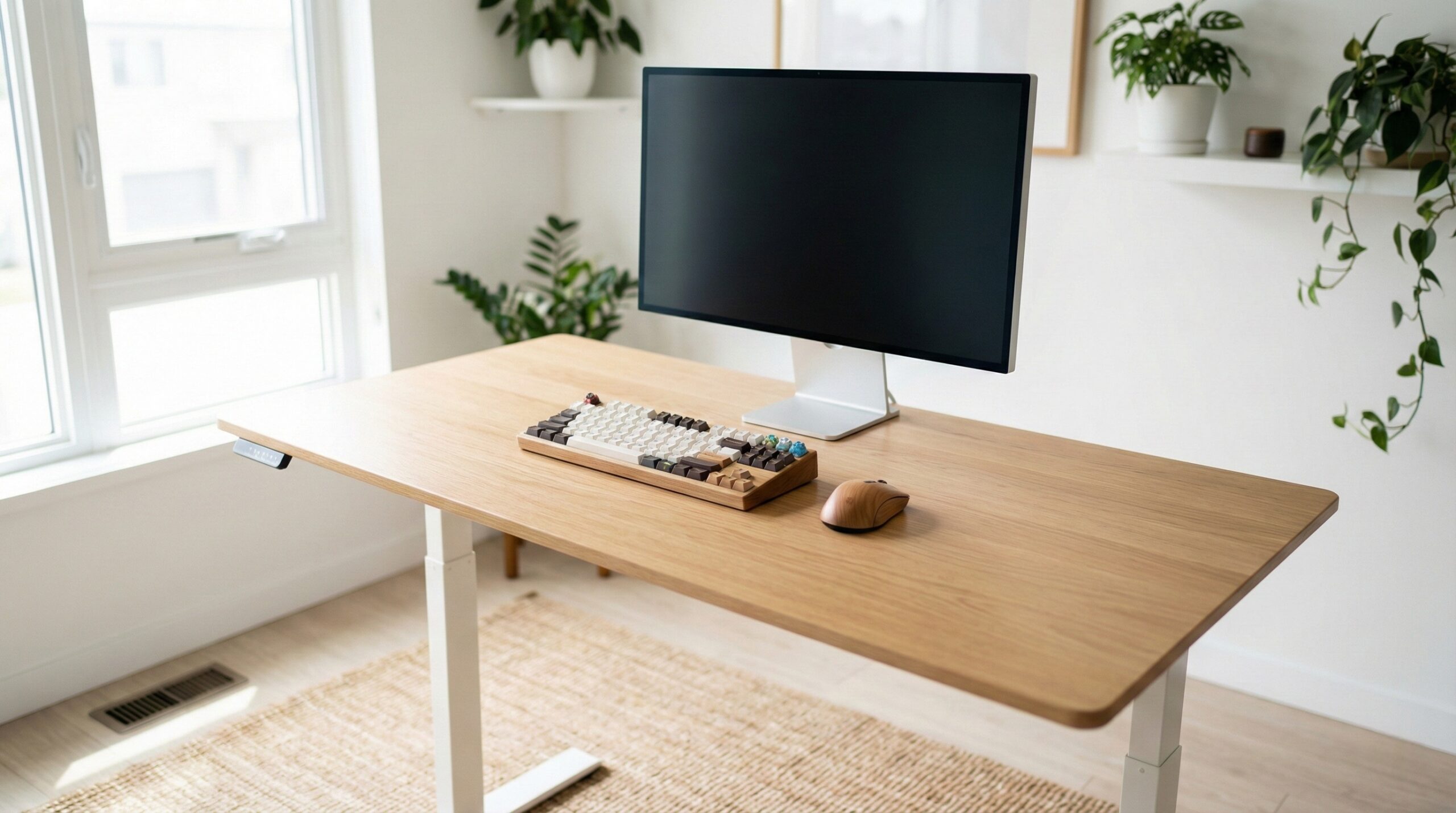
TL;DR
A cheap desk can absolutely work — if you prioritize stability and fit over extra width. For most small home-office setups, we’d start with a compact, under-$30 option like the PayLessHere 32″ or OLIXIS 31″ and only spend more if you need a corner layout or built-in power like the COSTWAY corner desk.
What a Cheap Desk Actually Is
In home-office terms, a “cheap desk” isn’t just the lowest price you can find — it’s a desk that meets your minimum requirements for fit, stability, and durability at an entry-level cost. Most truly budget desks land in a few predictable formats:
- Compact rectangular desks (around 31–32 inches wide) designed for a laptop, a small monitor, or a basic student setup.
- Simple metal-frame + laminate top builds, where the cost savings come from thinner desktop panels, fewer braces, and lighter overall weight.
- Small-space “utility” desks that include inexpensive add-ons like a side hook, storage pouch, or a small shelf to increase usable organization without increasing the footprint.
The basic formula is:
Cheap desk = small-to-medium surface + light frame + simple assembly + limited tolerance for heavy or off-center loads.
That’s why the biggest “cheap desk” risks show up in three places:
- Wobble and racking: Light frames and long unsupported spans can sway when you type, write, or bump the desk edge. Stability matters more than a few extra inches of width.
- Desktop durability: Budget tops (often particleboard/MDF with a laminate) can scratch, chip at corners, or swell if liquids sit — especially along edges and seams.
- Assembly and shipping issues: Low-cost desks are more likely to arrive with cosmetic dings, loose hardware, or confusing instructions. Planning to inventory parts before building saves headaches.
Ergonomically, cheap desks can still be “good enough” if you set them up correctly. General workstation guidance from OSHA computer workstation resources and NIOSH ergonomics guidance emphasizes matching desk height, chair height, and monitor position to keep shoulders relaxed and wrists neutral. If a desk is fixed-height (most cheap desks are), your chair and keyboard setup often have to do the fine-tuning. If you’re dealing with ongoing discomfort, it’s worth checking in with a certified ergonomist or occupational therapist for personalized adjustments.
Finally, “cheap” doesn’t automatically mean unsafe or disposable — but it does mean you should think about your real load (monitor arms, printers, multiple monitors) and not just what fits on the surface. Some budget listings also omit clear load ratings, so it’s smart to be conservative, keep heavy items centered, and avoid leaning your bodyweight on an edge.
Who a Cheap Desk Fits Best
Cheap desks tend to work best when your needs are straightforward and your expectations are aligned with what entry-level materials can handle. We’d put you in the “good fit” category if you’re in one (or more) of these situations:
- You’re building a small-space workstation in a bedroom, apartment, dorm, or shared room and you need a compact footprint.
- Your setup is laptop-first (or a laptop + one modest monitor) and you’re not mounting a heavy monitor arm.
- You want a simple writing/administrative station for bills, planning, homework, or light creative work.
- You need a temporary or secondary desk (guest room, kid’s room, overflow workspace) and you don’t want to overspend.
- You’re comfortable with basic assembly and willing to re-tighten hardware after a week or two as the frame “settles.”
In buyer feedback, the happiest cheap-desk owners are usually the ones who buy for the right use case: compact, simple, and light-duty. For example, one owner summarized the appeal of a tiny budget desk like this: “This little desk is just the right size for a bedroom office or spare bedroom and very easy to put together.” — verified buyer, 5 stars.
If you’re unsure, focus on “usable work zone” rather than just overall width. Think through what actually needs to live on the desk at the same time: monitor base (or stand), keyboard and mouse area, plus a little writing space. If you can meet those needs with a smaller desk, you’ll often get better stability for the money than going wider in the same price tier.
Who Should Skip a Cheap Desk
Cheap desks aren’t a good match when your setup or schedule demands more rigidity, more surface durability, or more ergonomic flexibility than entry-level materials can reliably provide.
You’ll usually be better off spending more (even a little more) if:
- You work full-time at the desk and notice wobble or shaky surfaces drive you nuts over long days.
- You plan to use a monitor arm, especially with a heavier display — clamps concentrate force on a small area of the desktop, which can flex or damage thinner tops.
- You run a heavier setup (dual monitors, printer, desktop tower on top, audio gear) and want the desk to feel planted.
- You’re hard on surfaces (lots of writing pressure, crafting, frequent spills) and don’t want to baby the finish.
- You hate assembly risk and don’t want to deal with occasional missing hardware, misaligned holes, or shipping scuffs.
Budget desks can also vary more in “unit-to-unit” consistency. In home office worker reviews, you’ll see both glowing satisfaction and “you get what you pay for” realism — sometimes on the very same model. One critical note that captures the downside: “Nice looking little desk but it is a little flimsy but it’s really cheap price so you kind of get what you pay for” — verified buyer, 3 stars.
If that sounds like your personal tolerance level is low, skipping the cheapest tier can save you time and annoyance. Another option: keep the desk cheap, but invest in the pieces that affect comfort most — chair, keyboard/mouse setup, monitor height, and lighting — using workstation-fit principles like those in the OSHA computer workstation resources.
Price and Value
For “cheap desk” shoppers, pricing generally clusters into two tiers:
- Ultra-budget compact desks: about $20–$30. This is where you’ll see the simplest rectangular desks, often around 31–32 inches wide. In this range, value is mostly about basic functionality: a surface, a frame, and decent-enough stability if assembled carefully.
- Budget-plus small-space desks: about $75–$100. This tier can add features (corner shapes, shelves, power/USB) and sometimes a bit more structure — but you still want to watch for lightweight builds and shipping/packaging issues.
From our featured options:
- PayLessHere 32 Inch Computer Desk: typically $20–$30. Best value when you need a basic compact desk and your setup is light.
- OLIXIS 31 Inch Home Office Desk: typically $20–$30. Similar pricing, with extra small-space add-ons (storage pouch and hook) that can be genuinely useful in tight rooms.
- COSTWAY Corner Computer Desk with USB Ports & Power Outlet: typically $75–$100. More expensive, but you’re paying for the corner footprint and built-in power/USB convenience.
Value, at these prices, comes down to avoiding the expensive mistakes: buying too big for your room, too small for your equipment, or too flimsy for your daily use. If you can’t confirm exact dimensions, or if returns look painful, it may be “cheap” upfront but costly in time and hassle.
Common Mistakes When Trying a Cheap Desk
Most cheap-desk disappointments are predictable — and avoidable. Here are the mistakes we see most often in user reports, along with how to sidestep them.
- Buying based on width alone (and ignoring depth): Shallow desks can force the monitor too close to your face, or push your keyboard to the edge. Measure your actual usable setup: monitor stand/arm base, keyboard and mouse area, plus writing space.
- Assuming a thin top can handle a monitor arm: Even if the desk “fits” a clamp, thinner tops can flex or get damaged over time. If you must use an arm on a budget desk, consider a reinforcement plate and keep loads centered.
- Not tightening and re-checking hardware: Budget desks often need a second tightening pass after a week or two. If there are adjustable feet, leveling them can make a big difference.
- Over-torquing screws during assembly: Particleboard and thin metal can strip if you crank too hard. Tighten gradually and evenly.
- Skipping the “inventory and inspect” step: Open the box, verify you have all hardware, and check panels for damage before you start building. Photograph issues immediately so you have a smoother replacement/return conversation if needed.
One simple lesson from buyer feedback: pay attention to what owners praise and what they quietly warn about. For instance, a satisfied owner liked the value but still framed expectations around the price: “Solid desk quality and size wise for the cheap price of $20. Very minimal issues and is very easy to setup” — verified buyer, 4 stars.
Also: don’t ignore ergonomics just because the desk is cheap. Evidence-based guidance from NIOSH ergonomics guidance and OSHA computer workstation resources is especially helpful with fixed-height desks — if the desk height isn’t ideal for you, you can often correct with chair height, a footrest, and monitor positioning.
FAQ
What size cheap desk do I need for a laptop and one monitor?
Most people can make a compact desk work if it has enough depth for the monitor to sit back while leaving room for a keyboard and mouse. Measure your “usable work zone” (monitor base + keyboard/mouse area + writing space) rather than guessing by width alone. If you want posture cues, the OSHA computer workstation resources are a solid baseline.
Can a cheap desk safely hold a monitor arm?
Sometimes — but it depends on the desktop thickness/rigidity and whether the rear edge allows a secure clamp. Monitor arms create a concentrated load that can flex or damage thinner particleboard tops. If you’re determined to use one, consider a reinforcement plate and keep the arm’s leverage as short as practical. When in doubt, a certified ergonomist or occupational therapist can help you set up a safer workstation configuration.
How do I reduce wobble on a budget desk?
Start with the basics: assemble on a flat surface, tighten all fasteners evenly, and level any adjustable feet. After a week or two of use, do a second tightening pass — parts can settle. If your layout allows, placing the desk against a wall can also reduce perceived sway.
What materials last longest in cheap desks?
In general, laminated tops can hold up well for light use, but edge banding quality matters a lot — edges are where swelling and peeling often start. If you write frequently or use a gaming mouse, a desk mat can protect the finish and improve the feel. For broader ergonomics and comfort considerations, the NIOSH ergonomics guidance is a useful reference point.
Is a corner desk worth paying more for if my budget is tight?
A corner desk can be worth it if it solves a real space constraint — like turning an unused corner into a functional workstation. The tradeoff is you may get a smaller-than-expected usable surface for the money, so confirm the exact dimensions and think through what needs to sit where (monitor, keyboard, notebook space, and any accessories).
What’s the biggest “hidden cost” risk with cheap desks?
Returns and replacements. Low-cost desks can arrive with cosmetic damage, loose parts, or missing hardware more often than pricier options, and re-boxing a desk can be a hassle. Before you buy, check the return window and inspect the package right away when it arrives.
How do I set up a cheap desk so it feels ergonomic?
Use your chair and monitor position to make up for a fixed-height desk: aim for relaxed shoulders, neutral wrists, and a monitor position that doesn’t force you to crane your neck. The OSHA computer workstation resources and NIOSH ergonomics guidance offer practical setup guidelines you can apply to almost any desk.
Looking for these on Amazon? Browse cheap desk on Amazon →
Bottom Line
A cheap desk is a smart buy when your setup is simple and you choose stability and correct sizing over extra surface area. Stick to compact desks for light-duty work, be realistic about monitor arms and heavier loads, and pay attention to assembly/return details so “cheap” doesn’t turn into a hassle.
Affiliate disclosure: This page includes affiliate links. Purchases through these links support our work at no added cost.