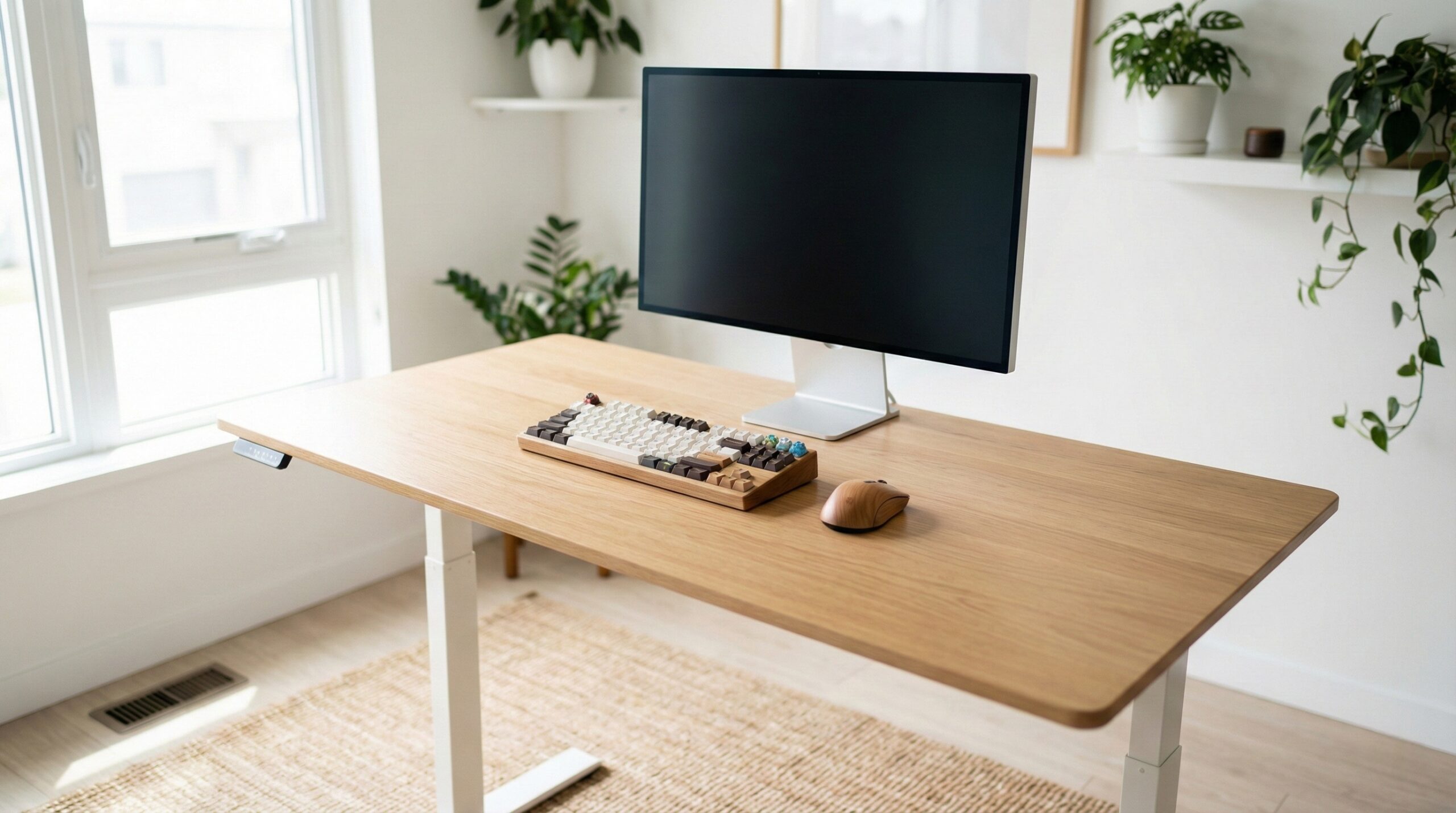
TL;DR
For narrow desks, the biggest mistake is buying a shelf that’s too deep — it steals your keyboard and mouse zone and can push your monitor uncomfortably close. We’d prioritize a shallow footprint, stable construction for whatever you’ll place on top (especially a monitor), and an open-back/cable-friendly design so cords don’t get trapped against the wall.
Top Recommended Desk Shelves for Narrow Desks
| Product | Best For | Price | Pros/Cons | Visit |
|---|---|---|---|---|
| NUTIKAS Desk Shelves Desktop Organizer Shelf | Vertical cubbies without widening your setup | $20 – $30 | Lots of cubby-style storage; sizing/fit can surprise | Visit Amazon |
| SUPER DEAL Desktop Bookshelf Countertop Storage Hutch | Multi-tier “hutch” storage above a small desk | $50 – $50 | Adds multiple shelves to declutter; instructions/parts can be an issue | Visit Amazon |
| Gianotter Dual Monitor Stand Riser Desk Organizer with | Monitor riser + drawers on a tight desktop | $30 – $30 | Creates under-monitor storage fast; some buyers report instability | Visit Amazon |
Top Pick: Best Overall Desk Shelves for Narrow Desks
NUTIKAS Desk Shelves Desktop Organizer Shelf
Best for: A small apartment or bedroom office where you need more storage on a narrow desk, but you can’t afford to lose much front-to-back working space.
The Good
- Designed around vertical storage density: cubbies help you stack items up instead of spreading them across the desk.
- Good fit for clutter-heavy setups (notebooks, chargers, sticky notes, small desk tools) where “everything flat” turns into piles fast.
- Helps you keep frequently used items within reach while leaving more open desk surface for mousing and writing.
- Flexible organizer-style layout that can work for mixed items (office supplies + small tech accessories).
The Bad
- Some buyers say sizing isn’t what they expected, which matters a lot when your desk is already narrow.
- Fit/compatibility can be tricky depending on what you’re trying to place in the cubbies (or on top).
- Buyer feedback suggests the wood can be on the soft side, which may matter if you reassemble or move it often.
4.4/5 across 478 Amazon reviews
“This is a wonderful tidy up, and it’s adjustable length is what appealed to me most, when selecting item. It holds my books and spells potions, with candles and cauldrons and fits neatly into the space on a shelf in the wardrobe. It has cleared and brought order to a space that was messy and unorganised.I love how easy it was to put together.” — Verified Amazon buyer (5 stars)
“A good size, but I thought it would be a tiny bit smaller, wish there were more adjustable holes, the wood is very soft, don’t use drill gun, The quality isn’t that great, but it is pretty sturdy. Easy to put together (with the video) the black color makes the damage’s very visible (straight out the box) also has weird residue is the crevices of each panel.…” — Verified Amazon buyer (3 stars)
Typical price: $20 – $30
“I love all the cubbies so now I’m using vertical space instead of having a big hectic pile.” — verified buyer, 5 stars
Our Take: If your main goal is getting items off the desktop without adding a bulky hutch footprint, this cubby-first organizer is the most narrow-desk-friendly choice of the group — just measure carefully and avoid overloading it if you tend to rearrange your setup.
SUPER DEAL Desktop Bookshelf Countertop Storage Hutch
Best for: A home office worker on a compact desk who needs “shelves above the desk” for books, paper, and small bins — especially if you’re trying to keep your work surface clear for a laptop and mouse.
The Good
- Hutch-style design adds multiple shelves above your desk, which can be a smart move when width is limited.
- Works well for storing lighter items you want visible and reachable (folders, notebooks, small organizers).
- Buyer feedback suggests it can feel straightforward to assemble once everything is accounted for.
- Can help declutter the desktop so you’re not pushing your keyboard and mouse into a cramped area.
The Bad
- Some buyers report issues with instructions, parts, or the design, so plan for a slower build and inspect pieces before assembling.
- Lower review volume than some alternatives, so there’s less “crowd data” on long-term durability.
- As with many desktop hutches, cable routing can get messy if the back isn’t open enough for your outlet/power brick layout.
4.5/5 across 25 Amazon reviews
“Easy to put together it is stable and it was a great addition to a desk for my grandchildren!” — Verified Amazon buyer (5 stars)
“Issues: Instructions, parts, design.I checked “verified purchase” the reviews for this item and was impressed. It looks like just what I needed for my new desk – I just wanted a dew simple shelves to hold some knick-knacks and maybe a couple of supplies.I’ve put together dozens of pieces of furniture using the “cam lock” system. I’ve done this for my own…” — Verified Amazon buyer (3 stars)
Typical price: $50 – $50
“I wanted to be more organized and, having limited space, this seemed like a good solution.” — verified buyer, 5 stars
Our Take: Choose this one when you want maximum vertical storage on a tight desk and you’re okay taking your time with assembly — it’s best for organizing supplies above your work area rather than supporting heavy gear.
Gianotter Dual Monitor Stand Riser Desk Organizer with
Best for: A narrow desk setup where you want a monitor riser plus quick-access storage (drawers/holders) for small items, like in a dorm room workstation or a compact WFH nook.
The Good
- Creates usable space under the riser, which can be valuable on narrow desks for notebooks or a compact keyboard.
- Drawer-style organization can reduce visual clutter if you hate seeing cables, pens, and adapters scattered around.
- Combines “monitor stand” and “desktop shelf” into a single footprint, which is efficient when you’re short on space.
- Buyer feedback indicates it’s popular, with lots of reviews compared to many niche desktop shelves.
The Bad
- Some buyers say it feels unstable, which is a dealbreaker if you’re placing an expensive monitor on top.
- Buyer feedback suggests some accessories feel cheaply made (especially the plastic components).
- Drawer/side-holder add-ons can interfere with cable routing depending on which side your outlets are on.
4.6/5 across 2,666 Amazon reviews
“I’m so pleased with this monitor stand. I have my 24-inch all-in-one computer on it and it fits perfectly. This is really a game-changer. I have so much extra space now! Being able to keep my books and various desk supplies underneath the stand has cleared up a ton of room and it just looks so much more organized. It appears to be solidly made and the…” — Verified Amazon buyer (5 stars)
“It is half metal/ half plastic unstable stand i can say. When you want to use it like in first picture you won’t have anything to connect these three things together. I regret that I bought it. Pencil holder and drawers are cheap plastic. Pencil holder attached with magnet and if you put many pens it’s just falling down. Total disappointment.” — Verified Amazon buyer (1 stars)
Typical price: $30 – $30
“Pencil holder and drawers are cheap plastic. Pencil holder attached with magnet and if you put many pens it’s just falling down.” — verified buyer, 1 stars
Our Take: This is a good narrow-desk option when you specifically want drawers and quick-grab storage under/around your monitor — but if your desk wobbles or you bump it often, prioritize a sturdier riser or consider a monitor arm.
FAQ
What depth is best for a desk shelf on a narrow desk?
A practical target is “as shallow as you can go while still fitting your monitor base and essentials,” because depth is what steals your working area. Start by measuring the depth you need for comfortable keyboard and mouse use, then set your max shelf depth so you still have a usable reach zone in front; ergonomics guidance from sources like the Cornell University Ergonomics Web and NIOSH emphasizes keeping frequently used items within easy reach and not forcing awkward wrist/arm positions.
Can a desk shelf safely hold a monitor?
It can, but only if the shelf is rated for the load and is stable on your specific desk surface. Don’t exceed the stated load rating, make sure the shelf sits fully on the desktop (no overhang), and watch for racking/wobble — especially on lightweight or narrow desks where a bump can shift things; for durability and safety context, it’s worth looking for furniture that aligns with expectations from ANSI/BIFMA performance and stability principles (even when a product isn’t explicitly certified).
When is a desktop hutch better than a monitor riser for a narrow desk?
A hutch is usually better when your problem is “too many items, nowhere to put them,” because it adds vertical storage (multiple tiers) without needing to widen your setup. A monitor riser is better when your problem is “I need a little space back” — for example, stashing a keyboard, notebook, or small dock underneath — but you still want the center of your desk to feel open.
Are corner desk shelves better for narrow desks?
They can be, but it depends on how you position your monitor and where your outlets are. Corner-focused storage can free the center area for keyboard and mouse, but it can also force the monitor off-center or interfere with larger monitor stands; if you’re using a VESA monitor arm, you typically have more flexibility because you’re not trying to fit a wide stand base onto the shelf.
Do drawers on desktop shelves cause cable problems?
They can. Drawers and “solid back” designs often reduce the open space you’d normally use for routing monitor power cords, HDMI/DisplayPort cables, and power bricks; if your desk is against a wall, that can also block outlet access. Workarounds include using shorter right-angle plugs, routing cables to one side before they go behind the shelf, and choosing designs that leave the back open.
What materials last longest for desktop shelves?
In general, steel frames and thicker solid-wood or bamboo-style panels tend to hold up better to repeated moves and heavier loads than soft engineered wood, which can strip screws more easily over time. Regardless of material, stability (wide feet, anti-slip pads) and decent hardware matter a lot — and if you’re unsure, a certified ergonomist or occupational therapist can help you think through safe placement for your monitor and accessories on a small desk.
Will a desk shelf mess up monitor height and ergonomics?
It can if it raises the screen too high — research-based guidance generally points to keeping the monitor positioned to reduce neck strain, which often means not forcing prolonged upward gaze. If a shelf pushes your screen high, you may need to lower your chair/desk relationship (if possible) or consider a monitor arm so you can fine-tune height while keeping the desktop footprint small; see general workstation setup guidance from NIOSH and the Cornell University Ergonomics Web.
Bottom Line
For narrow desks, we’d start by choosing the shallowest shelf that still fits your monitor base and leaves you a comfortable keyboard-and-mouse zone, then look for vertical storage (cubbies/tiers) instead of extra depth. Our top pick is the NUTIKAS Desk Shelves Desktop Organizer Shelf because it focuses on vertical organization to reduce clutter without demanding a big desktop footprint; if you want more “above-desk” storage, the SUPER DEAL hutch is a solid alternate, and if you specifically want drawers under your screen, the Gianotter riser is the specialized pick.
Affiliate disclosure: This page includes affiliate links. Purchases through these links support our work at no added cost.