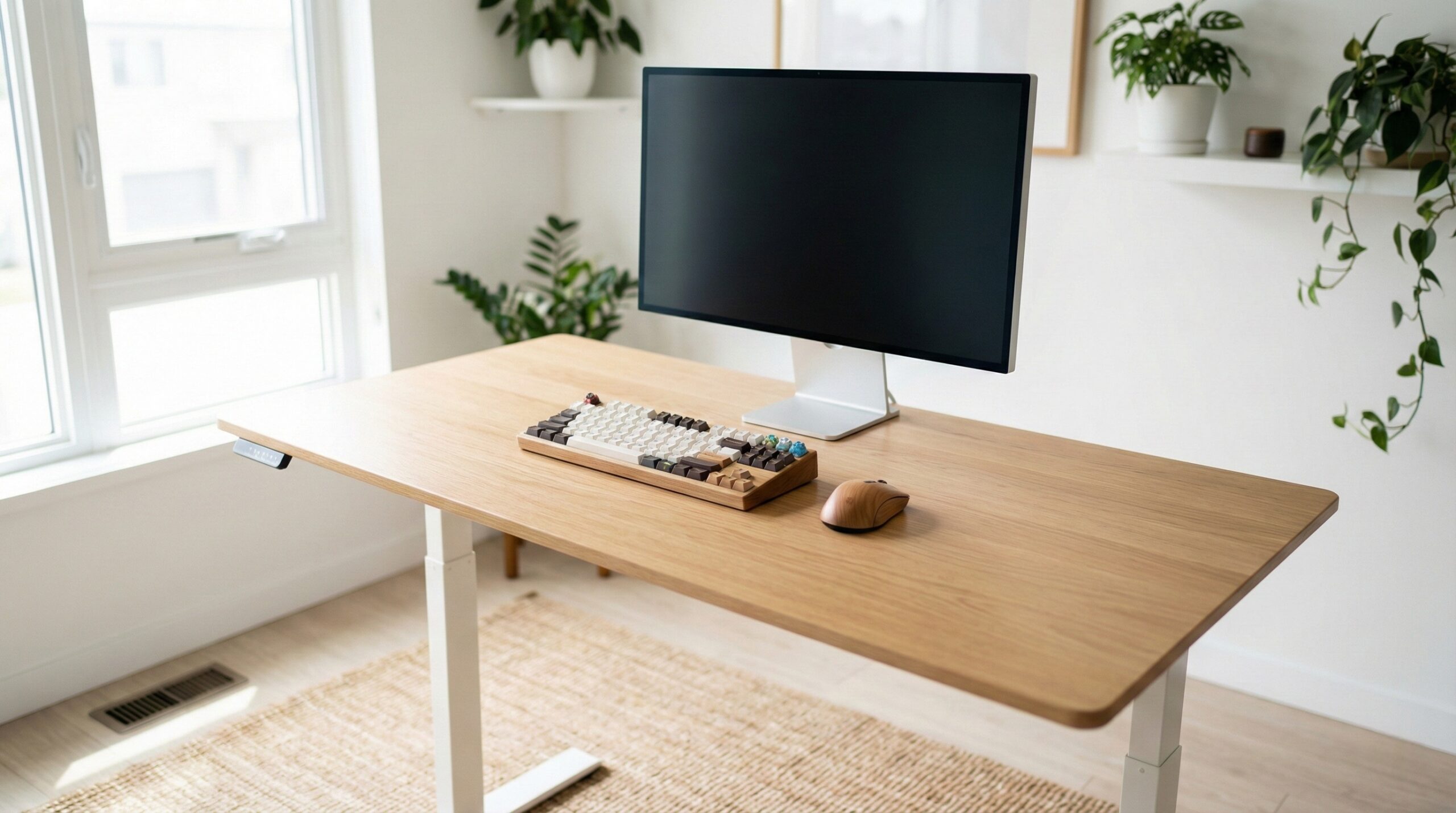
TL;DR
The best modern home office desk for most people is a simple rectangular model with enough width for your gear and enough depth to keep your monitor at a comfortable distance. In this category, the safest picks are the ones that balance usable surface area, stable construction, and manageable assembly rather than just a clean, minimalist look in product photos.
If you need built-in storage, the Bush Home 72-inch desk is the stronger fit. If you want a more affordable modern look with a simpler layout, the Tribesigns 63-inch desk makes more sense. Premium executive setups are in a different lane entirely and only pay off if you truly need the footprint and storage.
What Modern Home Office Desks Actually Are
A modern home office desk is usually less about ornate styling and more about clean lines, simple shapes, and mixed materials such as engineered wood, laminate, and metal. In practice, that means most desks in this category fall into one of three broad formats: a straightforward rectangular desk, a storage desk with drawers, or an executive-style setup with a larger work zone and more built-in organization.
For most home office workers, the real formula is simple: desk type + usable dimensions + storage tradeoffs + assembly quality. That matters more than whether the desk looks sleek in a listing image. A desk can look spacious online and still feel cramped once you add a monitor, keyboard, lamp, notebook, charger, and a few daily items.
Width is usually the first thing buyers notice, but depth is just as important. A shallow desk can push your screen too close to your eyes and leave too little room for a keyboard or writing space. Guidance from OSHA computer workstations and Cornell ergonomics research both point toward fitting the desk to your seated posture, screen placement, and reach zone rather than choosing purely on appearance.
That is why we usually treat modern desks as workflow furniture first and style purchases second. A laptop-only setup can work well on a smaller minimalist desk. A dual-monitor setup, writing-heavy schedule, or mixed work-and-admin routine usually needs a bigger surface. If you also want drawers, file storage, or space for a printer, the desk gets larger and heavier fast.
Materials also shape expectations. Many modern desks are not solid wood, even when the finish looks substantial. Engineered wood and laminate can still be perfectly reasonable at the right price, but buyers should expect differences in edge durability, weight, moisture resistance, and long-term wear. BIFMA standards are useful here as a general benchmark for office furniture performance and stability, even if a listing does not spell out every detail.
In short, a modern home office desk is best thought of as a workspace platform with a contemporary look. The best one for you is the one that supports your setup comfortably, fits the room cleanly, and does not create avoidable problems with legroom, wobble, or drawer frustration.
Who Modern Home Office Desks Fit Best
Modern home office desks fit best for buyers who want a cleaner visual style than a traditional office desk but still need real day-to-day function. They are especially good for people setting up a dedicated home office, guest room office, or apartment workspace where the desk has to look tidy without taking over the room.
The category works particularly well for a few groups:
- Remote workers who need a permanent desk but want a simple, current look.
- Laptop users who do not need a lot of built-in storage.
- People with one monitor or a compact dual-screen setup who are careful about measuring width and depth first.
- Buyers who already use shelves, cabinets, or rolling storage and just need a dependable main worksurface.
- Anyone furnishing a home office that needs to blend with bedroom or living-space decor.
For buyers who do need storage, a modern desk with drawers can still be a good fit, as long as they accept the tradeoff in added bulk and more complicated assembly. The Bush Home 72-inch desk is a good example of where that extra size pays off: more room to spread out, plus built-in organization. One owner summed up the appeal well: “Love the amount of desktop space for when i’m working on a project plus for my purry invader to lie down.” — verified buyer, 5 stars.
Budget-conscious shoppers also fit this category well when they focus on straightforward designs rather than oversized executive looks. The Tribesigns 63-inch desk stands out for that kind of buyer because it aims for a modern, uncluttered style at a lower price than storage-heavy options. Its simpler build also matches what many home office workers want: less visual weight, fewer moving parts, and a faster path from box to usable workspace. As one reviewer put it, “I’ve assembled a lot of “build-it-yourself” furniture over the years, and this desk was honestly one of the easiest and most solid pieces I’ve put together.” — verified buyer, 5 stars.
These desks are also a reasonable fit for buyers trying to build healthier workstation habits. Research suggests desk dimensions and layout affect how easily you can place your monitor, keyboard, and mouse in a comfortable position. If you are unsure about fit, a certified ergonomist or occupational therapist can help translate your body size and work habits into a better desk choice.
Who Should Skip Modern Home Office Desks
You should probably skip this category if you are shopping mostly for looks and have not measured your actual workspace. Modern desks are one of the easiest furniture categories to misjudge online. Clean lines and sparse styling can make a desk look larger than it feels in person, especially when product photos show minimal gear on top.
They are also not ideal for every workflow. You may want to look elsewhere if:
- You use multiple large monitors, a desktop tower, speakers, paperwork, and office accessories all at once but are considering a compact desk.
- You need deep file storage and expect desk drawers to replace a filing cabinet.
- You are sensitive to wobble, panel alignment issues, or flat-pack assembly hassles.
- You want heirloom materials and will be disappointed by engineered wood or laminate construction.
- You need maximum ergonomic adjustability rather than a fixed-height desk.
Storage desks are the most common source of disappointment when expectations are too high. More drawers can sound useful, but they also create more chances for alignment issues, reduced legroom, and extra setup time. Buyer feedback on the Bush desk shows that clearly: “I bought 7 of these desks and all of them the top drawer is misaligned. You have to lift the drawer to get it to push it completely in.” — verified buyer, 3 stars.
Compact modern desks can also frustrate buyers who assume sleek means roomy. That is the risk with lower-cost minimalist models if you do not map out your setup in advance. One critical review of the Tribesigns desk puts it bluntly: “Don’t buy this unless you have a tiny space. Looks larger than the photos show. Tiny desk. Assembly is easy. Very sturdy and durable!” — verified buyer, 1 stars.
Finally, skip this category if your room or your body needs a different workstation format altogether. If you have chronic discomfort, evidence indicates the better answer may be revisiting your entire setup, including chair, monitor height, and keyboard position, not just the desk style. Guidance from CDC NIOSH ergonomics and OSHA can help you judge whether a fixed modern desk is enough or whether you should be looking at a sit-stand model instead.
Price and Value
Modern home office desks cover a very wide price range, and the jump in cost does not always mean a proportional jump in usefulness. In the products here, the spread runs from roughly $175 to more than $3,000.
At the lower end, around $175 to $200, desks like the Tribesigns 63-inch model usually offer the best value for buyers who want a clean look and enough room for basic home office use. This range makes sense if your priorities are surface space, simple construction, and easy assembly. The main caution is that affordable modern desks can look larger in photos than they are in real life, so value depends heavily on getting the dimensions right.
In the midrange, around $300 to $350, the Bush Home 72-inch desk adds a larger footprint and built-in drawers. That can be a very fair trade if you genuinely need both workspace and storage in one piece. For someone working with paperwork, office supplies, and a dedicated room, paying a bit more for width and organization often makes sense. But if you already own nearby storage, that extra cost may not improve your day-to-day experience much.
Then there is the premium executive tier, represented here by the BBF 72-inch modern executive desk and storage suite at roughly $3,130 to $3,670. That level is not really competing with the two simpler desks above. It is for buyers furnishing a full executive-style home office and wanting a more substantial furniture presence with integrated storage. The value case depends on room size, budget, and whether you want the desk to function as the center of the whole office rather than just a workstation.
In plain terms:
- Best value for most buyers: a simple modern rectangular desk in the sub-$200 range if it fits your gear.
- Best upgrade reason: paying more for extra width and useful storage, not just a nicer-looking finish.
- Weak value move: overspending on executive styling when your actual work only requires a straightforward desk surface.
Value also includes durability and setup. If a cheaper desk is frustrating to assemble or ends up too small, it was not a bargain. If a larger desk solves storage, clutter, and workspace needs in one purchase, a higher price can be justified.
Common Mistakes When Trying Modern Home Office Desks
The biggest mistake is buying for appearance before measuring for function. Modern desks photograph well, and that can distract buyers from the basics: width, depth, leg clearance, and chair fit. A desk that looks airy and stylish can still feel cramped by the end of your first workday.
Here are the most common mistakes we see in this category:
- Ignoring depth. Buyers often focus on width, but shallow desks can place the monitor too close and leave little room for keyboard positioning or note-taking.
- Overestimating storage quality. Drawers are not always as smooth or as roomy as buyers expect, especially on flat-pack designs.
- Assuming all 60- to 72-inch desks feel large. Leg structure, drawer placement, and how much gear you use can change the usable area a lot.
- Skipping room measurements. The desk may fit the wall but still crowd the chair path or doorway.
- Underestimating assembly. A more complex desk can take much longer to build and may need extra floor space during setup.
The Tribesigns desk is a good reminder that easier assembly does not automatically mean the desk will feel big enough. One buyer noted, “Don’t buy this unless you have a tiny space. Looks larger than the photos show. Tiny desk. Assembly is easy. Very sturdy and durable!” — verified buyer, 1 stars.
Storage desks bring their own common mistake: assuming drawers will work perfectly out of the box. Buyer feedback on the Bush desk shows why checking setup and alignment comments matters: “I bought 7 of these desks and all of them the top drawer is misaligned. You have to lift the drawer to get it to push it completely in.” — verified buyer, 3 stars.
Another mistake is not planning the whole workstation. OSHA and Cornell both emphasize that desk choice interacts with monitor placement, keyboard reach, and seated posture. A good-looking desk will not fix a setup where your elbows are unsupported, your knees have poor clearance, or your screen is pushed too close to your face.
Lastly, buyers sometimes choose a drawer-heavy or executive desk because it looks more “office-like,” then discover they would have been happier with a simpler desk plus separate storage. If your supplies already live in shelving or a nearby cabinet, keeping the desk itself open can improve legroom and placement flexibility.
FAQ
What is the most important feature in a modern home office desk?
Usable width and depth matter most. Width determines whether your monitor, keyboard, and daily accessories fit comfortably, while depth affects monitor distance and writing space. In most home offices, these two measurements matter more than the finish or the styling details.
How do I know if a modern desk is deep enough?
Compare the desktop depth with your actual setup, not just the product photo. If you use a monitor and separate keyboard, you need enough room for the screen to sit at a comfortable viewing distance while keeping the keyboard and mouse in a natural reach zone. Guidance from OSHA computer workstations is useful for checking monitor and keyboard positioning basics.
Are desks with drawers better for a home office?
Only if you really need built-in storage. Drawers can reduce clutter and keep supplies close, but they also add bulk, weight, and more assembly points that can go wrong. If you already have shelving or a filing cabinet, a simpler desk often gives you better legroom and more flexible placement.
Do modern home office desks use solid wood?
Many do not. A lot of modern desks use engineered wood, laminate, metal, or mixed-material construction. That is not automatically bad, but it does affect weight, edge durability, and long-term wear. Read the materials carefully so your expectations match the actual build.
Is assembly a big deal with this type of desk?
Yes, often more than buyers expect. Flat-pack modern desks may arrive in multiple panels, and assembly quality can affect stability, drawer alignment, and how satisfied you feel once the desk is in use. Simpler open-leg desks are usually easier to build than drawer-heavy or executive-style models.
What desk type is best for most people working from home?
For most buyers, a straightforward rectangular desk is the safest bet. It gives you a clean layout, fewer moving parts, and more flexibility in compact rooms. Executive desks and drawer-heavy models make more sense when you need a broader work zone or built-in organization every day.
Can a modern desk help with ergonomic comfort?
Yes, but only if the size and layout fit your body and equipment. A desk that supports comfortable screen placement, keyboard reach, and knee clearance can make a real difference. If you are dealing with ongoing discomfort, a certified ergonomist or occupational therapist may be more helpful than simply switching to a different-looking desk. You can also review general principles through CDC NIOSH ergonomics and Cornell ergonomics research.
When is it worth paying for a premium executive desk?
It is worth it when you have a dedicated room, need integrated storage, want a substantial furniture presence, and will genuinely use the extra footprint. If your work is mostly laptop-based or centered around one monitor, a much less expensive modern desk will usually deliver better value.
Looking for these on Amazon? Browse modern home office desk on Amazon →
Bottom Line
A modern home office desk is worth buying when it supports your actual workflow, not just your preferred aesthetic. For most people, that means choosing a simple desk with enough width and depth first, then deciding whether storage is truly necessary.
If you need room to spread out and want drawers built in, a larger option like the Bush makes sense. If you want a cleaner, cheaper, and simpler setup, a desk like the Tribesigns is the safer starting point.
Affiliate disclosure: This page includes affiliate links. Purchases through these links support our work at no added cost.